
WRTG 27000: Creativity and Madness
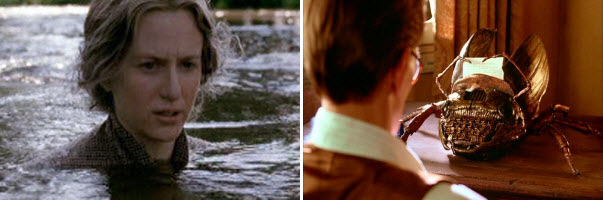
Virginia Woolf (portrayed in The Hours) William Burroughs (portrayed in Naked Lunch)
(Click to run targeted Subject searches in the IC Library catalog)
Creative ability
Creative ability--Psychological aspects
Creative ability--Social aspects
Personality and creative ability
Creation (Literary, artistic, etc.)
Creation (Literary, artistic, etc.)--History
Creation (Literary, artistic, etc.)--Psychological aspects
Creative thinking [most of these are about creatvity other than artistic]
Art and mental illness
Art--Psychology
Artists--Mental health
Artists--Psychology
Art therapy
Painting--Psychological aspects
Literature and mental illness
Mental illness in literature
Literature--Psychology
Authors--Mental health
Authorship--Psychological aspects
Psychology and literature
Genius
Genius and mental illness
Mental illness
Mental illness--Genetic aspects
Depression, Mental
Manic-depressive illness
Asperger's syndrome
Asperger's syndrome--Social aspects
Autism
Autism in literature
Schizophrenia
Psychoanalysis
Psychoanalysis and art
Psychoanalysis and literature
For information on the the mental health of an artist, biographies will probably serve you best. Most biographies can be found through a Subject search on the artist's name. Also scan any subheadings for likely resources on the artist's personal life:
Gogh, Vincent van, 1853-1890
Gogh, Vincent van, 1853-1890--Mental health
Gogh, Vincent van, 1853-1890--Psychology
And for attempts to probe an artist's psyche through his or her art:
Poe, Edgar Allan, 1809-1849--Criticism and interpretation
Plath, Sylvia--Criticism and interpretation
Creative ability
Creative ability--Psychological aspects
Creative ability--Social aspects
Personality and creative ability
Creation (Literary, artistic, etc.)
Creation (Literary, artistic, etc.)--History
Creation (Literary, artistic, etc.)--Psychological aspects
Creative thinking [most of these are about creatvity other than artistic]
Art and mental illness
Art--Psychology
Artists--Mental health
Artists--Psychology
Art therapy
Painting--Psychological aspects
Literature and mental illness
Mental illness in literature
Literature--Psychology
Authors--Mental health
Authorship--Psychological aspects
Psychology and literature
Genius
Genius and mental illness
Mental illness
Mental illness--Genetic aspects
Depression, Mental
Manic-depressive illness
Asperger's syndrome
Asperger's syndrome--Social aspects
Autism
Autism in literature
Schizophrenia
Psychoanalysis
Psychoanalysis and art
Psychoanalysis and literature
For information on the the mental health of an artist, biographies will probably serve you best. Most biographies can be found through a Subject search on the artist's name. Also scan any subheadings for likely resources on the artist's personal life:
Gogh, Vincent van, 1853-1890
Gogh, Vincent van, 1853-1890--Mental health
Gogh, Vincent van, 1853-1890--Psychology
And for attempts to probe an artist's psyche through his or her art:
Poe, Edgar Allan, 1809-1849--Criticism and interpretation
Plath, Sylvia--Criticism and interpretation
General OneFile : is the most user-friendly of our comprehensive databases, covering almost any topic from a wide range of disciplinary angles and offering lots of full text. Use the default Subject search to find the best subject heading for your topic (and when you find a good one be sure to look at the "Related Subjects" to see if there's something even better).
When you settle on a subject heading, open the "Subdivisions" link below it. Most General OneFile subject searches produce very large retrievals and the "subdivisions" help you narrow your search to a particular aspect: "Economic aspects," "Ethical aspects," "Forecasts and Trends," "History," "Media Coverage," "Political aspects," "Psychological aspects," "Social aspects," and "Statistics," to name only a few.
If the best available subdivision is still too broad, open it and add your own Keywords in the "Search within these results" slot at the upper left.
User Advisory: When first viewing your retrievals in General OneFile, note that you are seeing only the "Magazines" (popular articles) and must click on the tabs for "Academic Journals" (scholarly articles) or "News" (newspaper articles) to see those results.
ProQuest Research Library : is another comprehensive database with substantial full text. Use the "Thesaurus" (above the search slots) to preview what Subject Headings are available. Subect searching can be a more efficient way to search than with only Keywords, since it guarantees that the articles retrieved actually be about the Subject--not just use a particular word.
Note that to the right of your search results you can limit your retrieval by "Source Type" (including Magazines, Newspapers, Scholarly Journals), "Document Type," (including Cover Story, Editorial, or Interview), "Document Feature" (including Photographs, Illustrations), and "Location."
Above each set of articles you retrieve ProQuest will display related Subject searches to help either broaden or narrow your focus.
User Advisory: ProQuest is fussy about entering Subject searches in the designated search slot. If your subject is a person, enter the name--last name first--in the "Person" slot; if a named group of any kind--Microsoft, the Catholic Church, Radiohead, the New York Mets--enter it in "Co/Org"; if a place enter it in "Location."
Academic Search Premier Comprehensive subject coverage with considerable full text. Note that there is a “Subject Terms” link just above the search boxes, allowing you to search the index of Subject Headings--often a good first stop for more efficient Subject searching whereby you are guaranteed that your topic is indeed a main subject of the articles retrieved.
PsycINFO : The American Psychological Association use their own Subject vocabulary (called "Descriptors"), so a visit to the "Thesaurus" below the search slots is a good idea. If you find an article on exactly what you want, be sure to check the assigned "Descriptors" on the right of the citation for more ideas about useful search terms.
PsycINFO deals only with scholarly literature, much of it assuming a graduate-level understanding of the discipline. But among these you may find interesting, accessible articles on your topic.
User Advisory: If what you're searching for are "journal articles only" in "English," it's a good idea to check those boxes (below the search slots).
JSTOR : covers a wide range of scholarly journals in most disciplines, always beginning with the first issue of each one. This provides 100% full text access to articles from not only the first half of the 20th century but even the second half of the 19th. Be aware, however, that at the other end of the date range articles don't appear in JSTOR until at least 2-3 years after publication. Also be aware that for 100% full text you must change the setting from "include links to external content" to "include only content I can access."
JSTOR offers only a Keyword search of its complete full text, so retrievals are large, but the relevancy ranking does a good job of putting the strongest matches on the first few pages. This relevancy ranking does not weigh date, however, and will display a mix of articles written decades apart. So if your topic is time sensitive, be alert to publication dates.
User Advisory: The academic journals covered here feature numerous book reviews, so it's a good idea to tic the "Article" limit below the search slots so you won't be overwhelmed by book reviews on your topic.
Also note the "Date Range" limit, which in a database with an archive this deep can be very useful.
MLA International Bibliography provides the most complete and fully indexed coverage of articles and books on modern literatures, linguistics, folklore, rhetoric, and composition from 1925 to the present. There is ample full text provided by ProQuest, as well as links to full-text articles in JSTOR and Project Muse. Full text from other IC databases is also readily available via the "GetIt" links below article citations.
Because books, book chapters/essays, and dissertations will usually not be available full text, you may wish to limit your search to "Journal article" under "Source type."
"Author's Work" and "Author as Subject" will be especially helpful search fields at finding literary criticism. And for additional search field options either click on "Show more fields," or, for the complete list, open the drop-down menus to the right of the "Anywhere" default for the top three rows of search slots. This list includes both "Literary Influence"--who influenced a particular author you have entered--and "Literary Source"--who was influenced by that particular author.
If you set up a free "My Research" account with Proquest (top right), you can save all the articles you check, all the searches you want to remember, and set up e-mail or RSS notification for any new articles that match your search terms.
Project Muse although a smaller database, it complements JSTOR. LIke JSTOR it provides 100% full text of mostly scholarly journals, but its coverage is entirely current--mainly spanning the last 10-15 years. Muse uses a "black box" search approach--you enter your search terms in one slot with no designated field options--but in addition to slapping in keywords, you can use the same Library of Congress Subject Headings that work in the Library catalog (see above under "Subject Searches"). This broad approach to searching tends to generate large retrievals, so it's best to be as specific as possible. And note--once you have a retrieval set, you can add more search terms by clicking "Modify Search" at the top.
When you settle on a subject heading, open the "Subdivisions" link below it. Most General OneFile subject searches produce very large retrievals and the "subdivisions" help you narrow your search to a particular aspect: "Economic aspects," "Ethical aspects," "Forecasts and Trends," "History," "Media Coverage," "Political aspects," "Psychological aspects," "Social aspects," and "Statistics," to name only a few.
If the best available subdivision is still too broad, open it and add your own Keywords in the "Search within these results" slot at the upper left.
User Advisory: When first viewing your retrievals in General OneFile, note that you are seeing only the "Magazines" (popular articles) and must click on the tabs for "Academic Journals" (scholarly articles) or "News" (newspaper articles) to see those results.
ProQuest Research Library : is another comprehensive database with substantial full text. Use the "Thesaurus" (above the search slots) to preview what Subject Headings are available. Subect searching can be a more efficient way to search than with only Keywords, since it guarantees that the articles retrieved actually be about the Subject--not just use a particular word.
Note that to the right of your search results you can limit your retrieval by "Source Type" (including Magazines, Newspapers, Scholarly Journals), "Document Type," (including Cover Story, Editorial, or Interview), "Document Feature" (including Photographs, Illustrations), and "Location."
Above each set of articles you retrieve ProQuest will display related Subject searches to help either broaden or narrow your focus.
User Advisory: ProQuest is fussy about entering Subject searches in the designated search slot. If your subject is a person, enter the name--last name first--in the "Person" slot; if a named group of any kind--Microsoft, the Catholic Church, Radiohead, the New York Mets--enter it in "Co/Org"; if a place enter it in "Location."
Academic Search Premier Comprehensive subject coverage with considerable full text. Note that there is a “Subject Terms” link just above the search boxes, allowing you to search the index of Subject Headings--often a good first stop for more efficient Subject searching whereby you are guaranteed that your topic is indeed a main subject of the articles retrieved.
A good initial strategy in this database is to search a likely topic in the Subject Terms and when you find it “explode” the term by double clicking it--this brings up a list of related Subject terms. You can check as many terms as you like before "adding" them to your search by AND-ing or OR-ing them together.
User Advisory: For any retrieved set of articles, there will be a box displayed on the left that will limit the articles to “Scholarly” journals—just check the box and click the “Update Results” button below.
PsycINFO : The American Psychological Association use their own Subject vocabulary (called "Descriptors"), so a visit to the "Thesaurus" below the search slots is a good idea. If you find an article on exactly what you want, be sure to check the assigned "Descriptors" on the right of the citation for more ideas about useful search terms.
PsycINFO deals only with scholarly literature, much of it assuming a graduate-level understanding of the discipline. But among these you may find interesting, accessible articles on your topic.
User Advisory: If what you're searching for are "journal articles only" in "English," it's a good idea to check those boxes (below the search slots).
JSTOR : covers a wide range of scholarly journals in most disciplines, always beginning with the first issue of each one. This provides 100% full text access to articles from not only the first half of the 20th century but even the second half of the 19th. Be aware, however, that at the other end of the date range articles don't appear in JSTOR until at least 2-3 years after publication. Also be aware that for 100% full text you must change the setting from "include links to external content" to "include only content I can access."
JSTOR offers only a Keyword search of its complete full text, so retrievals are large, but the relevancy ranking does a good job of putting the strongest matches on the first few pages. This relevancy ranking does not weigh date, however, and will display a mix of articles written decades apart. So if your topic is time sensitive, be alert to publication dates.
User Advisory: The academic journals covered here feature numerous book reviews, so it's a good idea to tic the "Article" limit below the search slots so you won't be overwhelmed by book reviews on your topic.
Also note the "Date Range" limit, which in a database with an archive this deep can be very useful.
MLA International Bibliography provides the most complete and fully indexed coverage of articles and books on modern literatures, linguistics, folklore, rhetoric, and composition from 1925 to the present. There is ample full text provided by ProQuest, as well as links to full-text articles in JSTOR and Project Muse. Full text from other IC databases is also readily available via the "GetIt" links below article citations.
Because books, book chapters/essays, and dissertations will usually not be available full text, you may wish to limit your search to "Journal article" under "Source type."
"Author's Work" and "Author as Subject" will be especially helpful search fields at finding literary criticism. And for additional search field options either click on "Show more fields," or, for the complete list, open the drop-down menus to the right of the "Anywhere" default for the top three rows of search slots. This list includes both "Literary Influence"--who influenced a particular author you have entered--and "Literary Source"--who was influenced by that particular author.
If you set up a free "My Research" account with Proquest (top right), you can save all the articles you check, all the searches you want to remember, and set up e-mail or RSS notification for any new articles that match your search terms.
Project Muse although a smaller database, it complements JSTOR. LIke JSTOR it provides 100% full text of mostly scholarly journals, but its coverage is entirely current--mainly spanning the last 10-15 years. Muse uses a "black box" search approach--you enter your search terms in one slot with no designated field options--but in addition to slapping in keywords, you can use the same Library of Congress Subject Headings that work in the Library catalog (see above under "Subject Searches"). This broad approach to searching tends to generate large retrievals, so it's best to be as specific as possible. And note--once you have a retrieval set, you can add more search terms by clicking "Modify Search" at the top.
Few databases offer 100% full text. Most retrieve a mix of full text articles and article "citations"--article title, author(s), publication info, and usually an "abstract" or one-prargraph summary of the content. When a citation makes you want the full text, look below it for this icon:

Clicking "GETIT" checks (almost all) the IC Library's other databases to see if any offers the full text of the article--or if the Library has a print subscription to the journal in which the article appeared.
Clicking "GETIT" checks (almost all) the IC Library's other databases to see if any offers the full text of the article--or if the Library has a print subscription to the journal in which the article appeared.
- "GETIT" will usually find the full text in another database and open it in a new window.
- If none of our databases can access the full text but we have a print subsciption to the journal, "GETIT" will retrieve the Library catalog record for the journal so that you can see if the date of the article falls within the date range we have on hand.
- If full text is not available from any database or from a print subsciption, "GETIT" will provide a link to the IC Library's Interlibrary Loan. Log in (same as your IC e-mail)--and set up your account if you've never used it before. "GETIT" will have populated the article request form with all the necessary information and you simply submit the request elecrtonically. Most articles are supplied as digital files and will be sent to you via e-mail when they arrive.

Nobody heard him, the dead man,
But still he lay moaning:
I was much further out than you thought
And not waving but drowning.
Poor chap, he always loved larking
And now he's dead
It must have been too cold for him his heart gave way,
They said.
Oh, no no no, it was too cold always
(Still the dead one lay moaning)
I was much too far out all my life
And not waving but drowning.
Stevie Smith
[Smith suffered from depression and attempted suicide once. The American poet Sylvia Plath was an admirer and arranged a meeting, but took her own life first.]
But still he lay moaning:
I was much further out than you thought
And not waving but drowning.
Poor chap, he always loved larking
And now he's dead
It must have been too cold for him his heart gave way,
They said.
Oh, no no no, it was too cold always
(Still the dead one lay moaning)
I was much too far out all my life
And not waving but drowning.
Stevie Smith
[Smith suffered from depression and attempted suicide once. The American poet Sylvia Plath was an admirer and arranged a meeting, but took her own life first.]
- Ebrary
- Citation
- Interlibrary Loan
- Plagiarism Tutorial
(log-in required: IC email name/password)
- Art and Madness
- Revels in Madness
- Art Psychotherapy and Psychosis
- Frontiers of Neurology and Neuroscience, Volume 19 : Neurological Disorders in Famous Artists
- Artful Mind : Cognitive Science and the Riddle of Human Creativity
- Soul-Making : Interweaving Art And Analysis
- Art in the Offertorium : Narcissism, Psychoanalysis, and Cultural Metaphysics
- Psychoanalytic Aesthetics
- Elizabeth Bishop and Marianne Moore : The Psychodynamics of Creativity
- Origins of Genius : Darwinian Perspectives on Creativity
- Genius Explained
- Creativity from Constraints : The Psychology of Breakthrough
- Bipolar : The Elements of Bipolar Disorder
- Nature of Melancholy : From Aristotle to Kristeva
- Depression and Narrative : Telling the Dark
- Exact Mind : An Artist with Asperger Syndrome
- Asperger's Syndrome and High Achievement : Some Very Remarkable People
Online: log-in required
Oxford Companion to the Mind
Oxford Dictionary of Psychology
Print: Reference section on Library main floor
Encyclopedia of Human Behavior
Encyclopedia of Psychology
Handbook of Child Psychology
Handbook of Adolescent Psychology
Oxford Companion to the Mind
Oxford Dictionary of Psychology
Print: Reference section on Library main floor
Encyclopedia of Human Behavior
Encyclopedia of Psychology
Handbook of Child Psychology
Handbook of Adolescent Psychology
- Mental illness, suicide and creativity: 40-Year prospective total population study : Perhaps the most extensive scientific research yet conducted on this subject--published 01/2013 in the Journal of Psychiatric Research (log-in required).
- Genius and Madness: Video of Simon Kyaga, lead author of the above study, discussing his interest in the topic.
- Creativity and Psychopathology: This link is to a Powerpoint presentation by Dean Keith Simonton--a widely published professor of Psychology. It's fairly detailed for Powerpoint and provides a nice overview of the topic. Also available as an essay.
- Heightened Incidence of Depressive Symptoms in Adolescents Involved in the Arts: Paper published in 2012 in Psychology of Aesthetics, Creativity, and the Arts, the conclusion and discussion sections at the end may prove especially useful.
- Mental Illness and Creativity: A Neurological View of the “Tortured Artist”: Article from the Stanford Journal of Neuroscience.
- GENIUS, LUNATICS, AND POETS: MENTAL ILLNESS IN PRIZE-WINNING AUTHORS: Article from the journal Imagination, Cognition and Personality (log-in required).
- Manic-Depressive Illness and Creativity: Article from Scientific American (log-in required).
- Are Genius and Madness Related? Contemporary Answers to an Ancient Question: article from Psychiatric Times.
- The Dark Side of Creativity: Biological Vulnerability and Negative Emotions Lead toGreater Artistic Creativity: from a couple of Harvard researchers, published in Personality and Social Psychology Bulletin, the study itself is highly technical, but you may find the opening and closing discussions useful--as well as the bibliography.
- The 'Sylvia Plath' effect: Questions swirl around a supposed link between creativity and mental illness: Short overview at the APA site.
- Creative minds 'mimic schizophrenia: from BBC News, and note the related stories.
- Famous Artists with Bipolar Disorders: List from a book titled Touched With Fire; Manic-Depressive Ilness and the Artistic Temperament. A great deal of posthumous diagnosis here, so take it with a grain of salt. Also see the "People with Mental Illness Enrich Our Lives" list from the National Alliance on Mental Illness site--predominantly artists. And for much more inclusive--and questionable--lists, try the Wikipedia pages for People with Bipolar Disorder and People with Major Depressive Disorder.
MLA is the citation style used by most disciplines in the Humanities. MLA revised its style in 2008 in the MLA Style Manual, and these changes have been incorporated in the 7th edition of the MLA Handbook (May 2009). The guides below use the 2008/9 standards.
