
Musicians for World Harmony: Grant Writing

This guide was created for a 2009 course and has not been updated since.
.jpg)
(1).jpg)
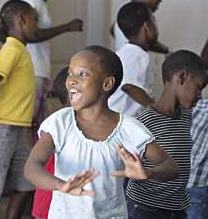
Some of the Library's resources on Uganda and East Africa are dated, and much of the newest material will be found under the broader Subject Heading "Africa":
Uganda--Economic conditions--1979-
Uganda--History--1979-
Uganda--Politics and government--1979-
Uganda--Politics and government--1979---Congresses
Uganda--Social life and customs
Africa, East
Africa, East--Economic integration
Africa, East--Politics and government
Africa, East--Social policy
Africa--Civilization
Africa--Social conditions--1960-
Africa--Social life and customs
Keep in mind that orphans and AIDS-related deaths are closely connected in East Africa:
Orphans--Africa
Orphans--Services for--Africa
AIDS (Disease)--Africa
AIDS (Disease) and the arts
AIDS (Disease)--Social aspects--Africa
AIDS (Disease)--Uganda--Kampala
The IC Library has a wealth of resources on music. Most have a Western focus, but the ideas about the therapeutic, educational, psychological, and social functions of music may be applicable to all cultures:
Music--Instruction and study
Music--Instruction and study--Africa
Music--Instruction and study--Juvenile
Music therapy
Music therapy for children
Music in education
Music, Influence of
Music--Psychological aspects
Music--Social aspects
Music and society
Music--Political aspects
Music and globalization
international relations and culture
Music--Africa--History and criticism
World music--History and criticism
Uganda--Economic conditions--1979-
Uganda--History--1979-
Uganda--Politics and government--1979-
Uganda--Politics and government--1979---Congresses
Uganda--Social life and customs
Africa, East
Africa, East--Economic integration
Africa, East--Politics and government
Africa, East--Social policy
Africa--Civilization
Africa--Social conditions--1960-
Africa--Social life and customs
Keep in mind that orphans and AIDS-related deaths are closely connected in East Africa:
Orphans--Africa
Orphans--Services for--Africa
AIDS (Disease)--Africa
AIDS (Disease) and the arts
AIDS (Disease)--Social aspects--Africa
AIDS (Disease)--Uganda--Kampala
The IC Library has a wealth of resources on music. Most have a Western focus, but the ideas about the therapeutic, educational, psychological, and social functions of music may be applicable to all cultures:
Music--Instruction and study
Music--Instruction and study--Africa
Music--Instruction and study--Juvenile
Music therapy
Music therapy for children
Music in education
Music, Influence of
Music--Psychological aspects
Music--Social aspects
Music and society
Music--Political aspects
Music and globalization
international relations and culture
Music--Africa--History and criticism
World music--History and criticism
General OneFile :
Our most user friendly database for this topic. Try searching a broad topic like "Uganda" and then open the "Subdivisions" below it and look at relevant subheadings such as "Demographic aspects," Education policy," "Forecasts and trends," "Health policy," Political aspects," and "Social aspects." These will give you context, but for greater focus simply click on the Subject "Uganda" and open all 7700 articles. Then in the "Search within these results" slot at the upper left enter Keywords such as "orphans" or "music." And the same is true of a Subject like "Music Therapy": open all the articles and at the upper left search within the results for "children."
Another approach would be to search a Subject like "Orphans," open the "Subdivisions," but then note the "Topics" drop-down menu at the upper right. "Topics" is the default, but you can change it to "Locations" and thereby target the articles concerning orphans in "Africa" and "Uganda." This Locations search also works well with the Subject of "AIDs," again allowing you to target Africa and Uganda.
ProQuest Research Library :
Click "Continue" on the opening screen and at the search screen open the "More Sarch Options" tab on the lower left. Try putting Uganda in the "Locations" slot and combining it with "Subjects" such as "Orphans," "Music," or "AIDs." Or run a Subject search on "Music Therapy" and "Children."
RILM Abstracts of Music Literature :
No full text, but the ArticleLinker arrows will connect you to full text if it's available in any of our other databases. Because of the international scope and range of materials here, its a good idea to set "Limited to" below the search slots to "Articles only" and "English only." Running a simple search on Uganda as a Descriptor will bring up several dozen relevant-looking articles.
ERIC (Ebsco interface) :
A disciplinary database in Education—at all levels. The field of Education has its own set of Subject Headings so be sure to browse the “Thesaurus” (above the search slots) for the best "Descriptors." ERIC provides access not only to relevant journal literature (citations for these end in a number preceded by EJ—ERIC Journal), but also to research published directly to ERIC (citations for these end in a number preceded by ED—ERIC Document.
Running a search on the Descriptors "Music Therapy" and "Children" retrieves many articles about very specific conditions--autism, etc--but also some more general articles on how it can treat anxiety or promote socialization. Oddly, geographic locations don't work as Descriptors in this database, so try entering "Uganda" as a Keyword or "Africa and orphans." In the latter, South Africa will be the focus of many articles, but surely the problems of AIDS orphans there may be relevant to Uganda.
LexisNexis Academic :
This is our best database for 100% full text international and national newspaper articles. Don't settle for the default General "Easy Search" but instead click the "News" tab. Change the default "Anywhere in article" search to the "In Headline & Lead Paragraph" option for better focus. And notice that the default "Sources" setting is "US Newspapers & Wires," whereas for this topic you may want to select "Major World Publications." Also note that the default date setting is "3 months" but that you can expand this up to 10 years (2 years works well for this topic). And finally be aware that when you retrieve a set of articles you can still add extra search terms in the "Search within results" slot on the upper right.
LexisNexis only offers Keyword searching, so you may want to use the truncation symbol: ! For example, searching Uganda! will retrieve Uganda, Ugandan, and Ugandans. Try "Uganda! and orphan!" or "Uganda! and music!."
PsycINFO :
As with RILM, it's a good idea in this database to set the search limits to "Articles only" and "English only." Then try "Music Therapy" as a Descriptor in combination with "Uganda" in the "Anywhere" field--for a few articles--or with "Trauma" for some broader psychological context.
Want More? Take a look at my top 21 database recommendations in Desert Island Databases. Or open the Library's drop-down menu of "Research Guides," each of which begins with database recommendations.
Our most user friendly database for this topic. Try searching a broad topic like "Uganda" and then open the "Subdivisions" below it and look at relevant subheadings such as "Demographic aspects," Education policy," "Forecasts and trends," "Health policy," Political aspects," and "Social aspects." These will give you context, but for greater focus simply click on the Subject "Uganda" and open all 7700 articles. Then in the "Search within these results" slot at the upper left enter Keywords such as "orphans" or "music." And the same is true of a Subject like "Music Therapy": open all the articles and at the upper left search within the results for "children."
Another approach would be to search a Subject like "Orphans," open the "Subdivisions," but then note the "Topics" drop-down menu at the upper right. "Topics" is the default, but you can change it to "Locations" and thereby target the articles concerning orphans in "Africa" and "Uganda." This Locations search also works well with the Subject of "AIDs," again allowing you to target Africa and Uganda.
ProQuest Research Library :
Click "Continue" on the opening screen and at the search screen open the "More Sarch Options" tab on the lower left. Try putting Uganda in the "Locations" slot and combining it with "Subjects" such as "Orphans," "Music," or "AIDs." Or run a Subject search on "Music Therapy" and "Children."
RILM Abstracts of Music Literature :
No full text, but the ArticleLinker arrows will connect you to full text if it's available in any of our other databases. Because of the international scope and range of materials here, its a good idea to set "Limited to" below the search slots to "Articles only" and "English only." Running a simple search on Uganda as a Descriptor will bring up several dozen relevant-looking articles.
ERIC (Ebsco interface) :
A disciplinary database in Education—at all levels. The field of Education has its own set of Subject Headings so be sure to browse the “Thesaurus” (above the search slots) for the best "Descriptors." ERIC provides access not only to relevant journal literature (citations for these end in a number preceded by EJ—ERIC Journal), but also to research published directly to ERIC (citations for these end in a number preceded by ED—ERIC Document.
Running a search on the Descriptors "Music Therapy" and "Children" retrieves many articles about very specific conditions--autism, etc--but also some more general articles on how it can treat anxiety or promote socialization. Oddly, geographic locations don't work as Descriptors in this database, so try entering "Uganda" as a Keyword or "Africa and orphans." In the latter, South Africa will be the focus of many articles, but surely the problems of AIDS orphans there may be relevant to Uganda.
LexisNexis Academic :
This is our best database for 100% full text international and national newspaper articles. Don't settle for the default General "Easy Search" but instead click the "News" tab. Change the default "Anywhere in article" search to the "In Headline & Lead Paragraph" option for better focus. And notice that the default "Sources" setting is "US Newspapers & Wires," whereas for this topic you may want to select "Major World Publications." Also note that the default date setting is "3 months" but that you can expand this up to 10 years (2 years works well for this topic). And finally be aware that when you retrieve a set of articles you can still add extra search terms in the "Search within results" slot on the upper right.
LexisNexis only offers Keyword searching, so you may want to use the truncation symbol: ! For example, searching Uganda! will retrieve Uganda, Ugandan, and Ugandans. Try "Uganda! and orphan!" or "Uganda! and music!."
PsycINFO :
As with RILM, it's a good idea in this database to set the search limits to "Articles only" and "English only." Then try "Music Therapy" as a Descriptor in combination with "Uganda" in the "Anywhere" field--for a few articles--or with "Trauma" for some broader psychological context.
Want More? Take a look at my top 21 database recommendations in Desert Island Databases. Or open the Library's drop-down menu of "Research Guides," each of which begins with database recommendations.
.jpg)
Most of the IC Libary databases listed above contain only some full text. If the article you want is not availabe full text from the database you are searching, check below the citation for one of the images above. This is ArticleLinker and if available it will search a wide range of other IC Library databases, retrieving links to any full text it finds.

Music Therapy in Africa: It might be a good idea to examine similar outreach programs at other Music Schools. The Berklee School of Music in Boston has a site on its program, and see in particular the Music Therapy in Africa Report 2007 (a pdf file that takes a while to load).
The Music Therapy Community Clinic operates out of Cape Town, but some of the materials here could be relevant to establishing a similar program in Uganda.
Reaching Out to Africa's Orphans: A Framework for Public Action: A very substantive publication from the World Bank, some of which sounds as if it could be an authoritative source for establishing the context and need for outreach projects.
Africa South of the Sahara: Uganda: From Stanford and probably the fullest list of online resources relevant to this country. But the alphabetical order doesn't provide any alternative to scanning them all.
From the same site there is also a list of just Ugandan news sources.
African Studies Center: Uganda: From the University of Pennsylvania, a much shorter list, in case the one above left you dizzy.
Uganda: Society and Culture: Aid and Development: A good set of links from the Open Directory Project.
Uganda Bureau of Statistics: Here's a link to the Publications page. Information on Poverty, Population, and Health might be relevant (and note, Education is treated under Population).
HIV & AIDS in Uganda: A brief overview, but with a bibliography, most of which is linked and available online.
The Music Therapy Community Clinic operates out of Cape Town, but some of the materials here could be relevant to establishing a similar program in Uganda.
Reaching Out to Africa's Orphans: A Framework for Public Action: A very substantive publication from the World Bank, some of which sounds as if it could be an authoritative source for establishing the context and need for outreach projects.
Africa South of the Sahara: Uganda: From Stanford and probably the fullest list of online resources relevant to this country. But the alphabetical order doesn't provide any alternative to scanning them all.
From the same site there is also a list of just Ugandan news sources.
African Studies Center: Uganda: From the University of Pennsylvania, a much shorter list, in case the one above left you dizzy.
Uganda: Society and Culture: Aid and Development: A good set of links from the Open Directory Project.
Uganda Bureau of Statistics: Here's a link to the Publications page. Information on Poverty, Population, and Health might be relevant (and note, Education is treated under Population).
HIV & AIDS in Uganda: A brief overview, but with a bibliography, most of which is linked and available online.
Noodlebib guides you through the required data entry for citation in the MLA, APA, and Chicago/Turabian styles. It takes care of punctuation, alphabetization and formatting, producing a polished source list for import into Word.
- MLA citation for books: in print, from databases, on the Web
- MLA citation for articles: in print, from databases, on the Web.
- MLA citation for Web and Multimedia resources, including Web sites, movies, DVDs, CDs, and videos.
- MLA in-text (parenthetical) citation (far less satanic than the first three).
