
ICSM Palestine in Literature and Film
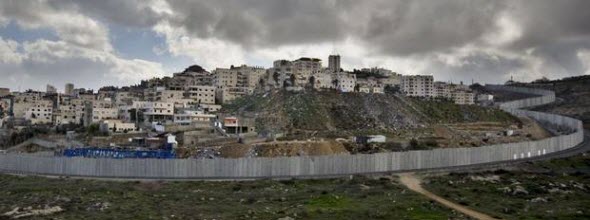
West Bank Barrier
Palestine--Antiquities
Palestine--Civilization
Palestine--Description and travel
Palestine--Economic conditions
Palestine--Emigration and immigration
Palestine--History
Palestine--History--1929-1948
Palestine--History--Partition, 1947
Palestine--International status
Palestine--Politics and government
Palestine--Politics and government--1917-1948
Palestine--Politics and government--1948-
Palestine--Social conditions
Palestine--Social life and customs
Gaza Strip--Politics and government
Gaza Strip--International status
Gaza Strip--Economic conditions
West Bank--Politics and government
West Bank--Social conditions--21st century
West Bank--Ethnic relations
West Bank--Economic conditions
Israeli West Bank Barrier
Israel
Israel--CivilizationPalestine--Civilization
Palestine--Description and travel
Palestine--Economic conditions
Palestine--Emigration and immigration
Palestine--History
Palestine--History--1929-1948
Palestine--History--Partition, 1947
Palestine--International status
Palestine--Politics and government
Palestine--Politics and government--1917-1948
Palestine--Politics and government--1948-
Palestine--Social conditions
Palestine--Social life and customs
Gaza Strip--Politics and government
Gaza Strip--International status
Gaza Strip--Economic conditions
West Bank--Politics and government
West Bank--Social conditions--21st century
West Bank--Ethnic relations
West Bank--Economic conditions
Israeli West Bank Barrier
Israel
Palestine in Judaism
Jews—Israel--Identity
Israel--Emigration and immigration
Israel--Ethnic relations
Israel--Foreign relations
Israel--Foreign relations--United States
United States--Foreign relations--Israel
Israel--History
Israel--Politics and government
Israel--Social conditions
Social integration--Israel
Zionism--Israel
Post-Zionism
Jerusalem--Ethnic relationsPost-Zionism
Jerusalem--History
Jerusalem--Politics and government
Israeli fiction--History and criticism
Israeli poetry--History and criticism
Motion pictures--Israel
Motion pictures--Israel--History
Palestinian Arabs
Palestinian Arabs--History
Palestinian Arabs--Civil rights
Palestinian Arabs--Legal status, laws, etc.--Israel
Palestinian Arabs--Israel
Palestinian Arabs--Israel--Politics and government
Palestinian Arabs--Israel--Social conditions
Palestinian Arabs--Government policy--Israel
Palestinian Arabs--Politics and government
Palestinian Arabs--Gaza Strip--Social conditions
Palestinian Arabs--Legal status, laws, etc.--Israel
Palestinian Arabs--Israel
Palestinian Arabs--Israel--Politics and government
Palestinian Arabs--Israel--Social conditions
Palestinian Arabs--Government policy--Israel
Palestinian Arabs--Politics and government
Palestinian Arabs--Gaza Strip--Social conditions
Palestinian Arabs--West Bank--Social conditions
Women, Palestinian Arab--Israel
Women, Palestinian Arab--Israel--Social conditions
Refugees, Palestinian Arab
Palestinian National Authority
Women, Palestinian Arab--Israel
Women, Palestinian Arab--Israel--Social conditions
Refugees, Palestinian Arab
Palestinian National Authority
Munaẓẓamat al-Taḥrīr al-Filasṭīnīyah [PLO]
Fatḥ (Organization) [Fatah]
Ḥarakat al-Muqāwamah al-Islāmīyah [Hamas]
Arabic fiction--Palestine--History and criticism
Arabic poetry--Palestine--History and criticism
Arabic literature--History and criticism
Motion pictures--Arab countries--History
Jewish-Arab relations
Fatḥ (Organization) [Fatah]
Ḥarakat al-Muqāwamah al-Islāmīyah [Hamas]
Arabic fiction--Palestine--History and criticism
Arabic poetry--Palestine--History and criticism
Arabic literature--History and criticism
Motion pictures--Arab countries--History
Jewish-Arab relations
Jewish-Arab relations--History
Middle East--Politics and government--1945-
Middle East--Politics and government--1979-
United States--Foreign relations--Middle East
Middle East--Foreign relations--United States
United States--Foreign relations--Israel
Israel--Foreign relations--United States
United States--Foreign relations--Palestine
Palestine--Foreign relations--United States
Middle East--Politics and government--1979-
United States--Foreign relations--Middle East
Middle East--Foreign relations--United States
United States--Foreign relations--Israel
Israel--Foreign relations--United States
United States--Foreign relations--Palestine
Palestine--Foreign relations--United States
Arab-Israeli conflict
Arab-Israeli conflict--1948-1967
Israel-Arab War, 1967
Arab-Israeli conflict--1967-1973
Arab-Israeli conflict--1973-1993
Arab-Israeli conflict--1993-
Arab-Israeli conflict--1993---Peace
Arab-Israeli conflict--Moral and ethical aspects
Arab-Israeli conflict--Literature and the conflict
Arab-Israeli conflict--Motion pictures and the conflictArab-Israeli conflict--Mass media and the conflict
Intifada, 1987-1993
Al-Aqsa Intifada, 2000-
Gaza War, 2008-2009
ProQuest Research Library : is another comprehensive database with substantial full text. Use the "Thesaurus" (above the search slots) to preview what Subject Headings are available. Subect searching can be a more efficient way to search than with only Keywords, since it guarantees that the articles retrieved actually be about the Subject--not just use a particular word.
Note that to the right of your search results you can limit your retrieval by "Source Type" (including Magazines, Newspapers, Scholarly Journals), "Document Type," (including Cover Story, Editorial, or Interview), "Document Feature" (including Photographs, Illustrations), and "Location."
Above each set of articles you retrieve ProQuest will display related Subject searches to help either broaden or narrow your focus.
User Advisory: ProQuest is fussy about entering Subject searches in the designated search slot. If your subject is a person, enter the name--last name first--in the "Person" slot; if a named group of any kind--Microsoft, the Catholic Church, Radiohead, the New York Mets--enter it in "Co/Org"; if a place enter it in "Location."
Academic Search Premier Comprehensive subject coverage with considerable full text. Note that there is a “Subject Terms” link just above the search boxes, allowing you to search the index of Subject Headings--often a good first stop for more efficient Subject searching whereby you are guaranteed that your topic is indeed a main subject of the articles retrieved.
User Advisory: Like ProQuest (see above) this database divides its Subject searches into more specific categories, including People and Geographic Terms.
A good initial strategy in this database is to search a likely topic in the Subject Terms and when you find it “explode” the term by double clicking it--this brings up a list of related Subject terms. You can check as many terms as you like before "adding" them to your search by AND-ing or OR-ing them together.
User Advisory: For any retrieved set of articles, there will be a box displayed on the left that will limit the articles to “Scholarly” journals—just check the box and click the “Update Results” button below.
General OneFile is a comprehensive databases--covering virtually any topic from a wide range of disciplinary angles. Use the default Subject search to find an appropriate Subject Heading for your topic and then open the "Subdivisions" link underneath. Among the most substantial subdivisions are Demonstrations & Protests, Economic Aspects, International Relations, Military Aspects, Political Aspects, and Social Aspects. Note: There is a subdivision Portrayals where you'll find articles on how a particular subject is portrayed in literature, on film, and in the media.
If the best available Subdivision is still too broad, open the set of articles and add Keywords in the "Search within these Results" slot.
User Advisory: When General OneFile displays a retrieval set, it opens to just the magazines. For more scholarly articles open the Academic Journals tab.
Note that to the right of your search results you can limit your retrieval by "Source Type" (including Magazines, Newspapers, Scholarly Journals), "Document Type," (including Cover Story, Editorial, or Interview), "Document Feature" (including Photographs, Illustrations), and "Location."
Above each set of articles you retrieve ProQuest will display related Subject searches to help either broaden or narrow your focus.
User Advisory: ProQuest is fussy about entering Subject searches in the designated search slot. If your subject is a person, enter the name--last name first--in the "Person" slot; if a named group of any kind--Microsoft, the Catholic Church, Radiohead, the New York Mets--enter it in "Co/Org"; if a place enter it in "Location."
Academic Search Premier Comprehensive subject coverage with considerable full text. Note that there is a “Subject Terms” link just above the search boxes, allowing you to search the index of Subject Headings--often a good first stop for more efficient Subject searching whereby you are guaranteed that your topic is indeed a main subject of the articles retrieved.
User Advisory: Like ProQuest (see above) this database divides its Subject searches into more specific categories, including People and Geographic Terms.
A good initial strategy in this database is to search a likely topic in the Subject Terms and when you find it “explode” the term by double clicking it--this brings up a list of related Subject terms. You can check as many terms as you like before "adding" them to your search by AND-ing or OR-ing them together.
User Advisory: For any retrieved set of articles, there will be a box displayed on the left that will limit the articles to “Scholarly” journals—just check the box and click the “Update Results” button below.
General OneFile is a comprehensive databases--covering virtually any topic from a wide range of disciplinary angles. Use the default Subject search to find an appropriate Subject Heading for your topic and then open the "Subdivisions" link underneath. Among the most substantial subdivisions are Demonstrations & Protests, Economic Aspects, International Relations, Military Aspects, Political Aspects, and Social Aspects. Note: There is a subdivision Portrayals where you'll find articles on how a particular subject is portrayed in literature, on film, and in the media.
If the best available Subdivision is still too broad, open the set of articles and add Keywords in the "Search within these Results" slot.
User Advisory: When General OneFile displays a retrieval set, it opens to just the magazines. For more scholarly articles open the Academic Journals tab.
JSTOR : covers a wide range of scholarly journals in most disciplines, always beginning with the first issue of each one. This provides 100% full text access to articles from not only the first half of the 20th century but even the second half of the 19th. (This is our only database where you can retrieve scholarly articles on Haiti across a wide range of disciplines published in the 1900-1970 period.) Be aware, however, that at the other end of the date range articles don't appear full text in JSTOR until at least 2-3 years after publication.
JSTOR offers only a Keyword search of its complete full text, so retrievals are large, but the relevancy ranking does a good job of putting the strongest matches on the first few pages. This relevancy ranking does not weigh date, however, and will display a mix of articles written decades apart. So if your topic is time sensitive, be alert to publication dates.
User Advisory: The academic journals covered here feature numerous book reviews, so it's a good idea to tick the "Article" limit below the search slots so you won't be overwhelmed by book reviews on your topic.
Also note the "Date Range" limit, which in a database with an archive this deep can be very useful.
LexisNexis Academic News: Offering a keyword search of 100% full text from a vast number of national and international newspapers, this is an easy database to use poorly and a bit tricky to use well. In order not to be overwhelmed with articles in which your search terms are mentioned anywhere—first or last paragraph—or any number of times—once or ten times—use commands to target articles in which your topic words are mentioned early or mentioned often.
JSTOR offers only a Keyword search of its complete full text, so retrievals are large, but the relevancy ranking does a good job of putting the strongest matches on the first few pages. This relevancy ranking does not weigh date, however, and will display a mix of articles written decades apart. So if your topic is time sensitive, be alert to publication dates.
User Advisory: The academic journals covered here feature numerous book reviews, so it's a good idea to tick the "Article" limit below the search slots so you won't be overwhelmed by book reviews on your topic.
Also note the "Date Range" limit, which in a database with an archive this deep can be very useful.
LexisNexis Academic News: Offering a keyword search of 100% full text from a vast number of national and international newspapers, this is an easy database to use poorly and a bit tricky to use well. In order not to be overwhelmed with articles in which your search terms are mentioned anywhere—first or last paragraph—or any number of times—once or ten times—use commands to target articles in which your topic words are mentioned early or mentioned often.
Use the hlead command (headline and lead paragraphs) to target articles in which your topic words occur in the prime news-story position of headline or first paragraphs. For example: hlead(fracking and pollution) will retrieve just the articles in which the words “fracking” and “pollution” are used in the headline or first paragraphs. Note: the term or terms to which you want this command to apply must be put in parentheses after hlead, with no space between.
Use the altleast command to target articles in which your topic words occur a set number of times. For example: atleast5(“gay marriage”) will retrieve only the articles where this phrase is used at least 5 times—indicating that it must be a main topic. You can plug in any number after atleast—atleast3 or atleast7. Note: the term or terms to which you want this command to apply must be put in parentheses with no space between the number you choose and the first parenthesis.
Use the date range offered under Advanced Options. Because this is a large database of 100% full text, one of the most effective ways to retrieve fewer than 1000 hits is to set up a time frame. Note: if you use the calendar icons to set beginning and end dates, you need to choose a year, a month, and a day for each. Without the day, the date won’t register.
New York Times (1851-2009) gives access to the full text of the New York Times 1851-2006: Reset the default search of "citation and document text" to "citation and abstract" (since this is a Keyword search of 100% full text, you are likely to generate too many passing mentions of your search terms if you search all the text; first try the more focused "citation and abstract" search and only broaden it to "document text" if you retrieve too few hits).
Use the "date range" limits to target the primary sources available here--contemporary reports. Without a date range limit you may retrieve hundreds of articles written decades after the events they discuss
ATLA religion database with ATLASerials : Our religion and theology database. To browse the Subject Headings available here, click on "Indexes" above the search slots and select "Subjects ALL" from the drop-down menu.
MLA International Bibliography provides the most complete and fully indexed coverage of articles and books on modern literatures, linguistics, folklore, rhetoric, and film from 1925 to the present. There is ample full text provided by ProQuest, as well as links to full-text articles in JSTOR and Project Muse. Full text from other IC databases is also readily available via the "GetIt" links below article citations.
Because books, book chapters/essays, and dissertations will usually not be available full text, you may wish to limit your search to "Journal article" under "Source type."
"Author's Work" and "Author as Subject" will be especially helpful search fields at finding literary criticism.
Among the Subject Headings available here are Israeli literature, Palestinian filmmakers, Palestinian literature, and Israeli-Palestinian conflict.
Use the altleast command to target articles in which your topic words occur a set number of times. For example: atleast5(“gay marriage”) will retrieve only the articles where this phrase is used at least 5 times—indicating that it must be a main topic. You can plug in any number after atleast—atleast3 or atleast7. Note: the term or terms to which you want this command to apply must be put in parentheses with no space between the number you choose and the first parenthesis.
Use the date range offered under Advanced Options. Because this is a large database of 100% full text, one of the most effective ways to retrieve fewer than 1000 hits is to set up a time frame. Note: if you use the calendar icons to set beginning and end dates, you need to choose a year, a month, and a day for each. Without the day, the date won’t register.
New York Times (1851-2009) gives access to the full text of the New York Times 1851-2006: Reset the default search of "citation and document text" to "citation and abstract" (since this is a Keyword search of 100% full text, you are likely to generate too many passing mentions of your search terms if you search all the text; first try the more focused "citation and abstract" search and only broaden it to "document text" if you retrieve too few hits).
Use the "date range" limits to target the primary sources available here--contemporary reports. Without a date range limit you may retrieve hundreds of articles written decades after the events they discuss
ATLA religion database with ATLASerials : Our religion and theology database. To browse the Subject Headings available here, click on "Indexes" above the search slots and select "Subjects ALL" from the drop-down menu.
MLA International Bibliography provides the most complete and fully indexed coverage of articles and books on modern literatures, linguistics, folklore, rhetoric, and film from 1925 to the present. There is ample full text provided by ProQuest, as well as links to full-text articles in JSTOR and Project Muse. Full text from other IC databases is also readily available via the "GetIt" links below article citations.
Because books, book chapters/essays, and dissertations will usually not be available full text, you may wish to limit your search to "Journal article" under "Source type."
"Author's Work" and "Author as Subject" will be especially helpful search fields at finding literary criticism.
Among the Subject Headings available here are Israeli literature, Palestinian filmmakers, Palestinian literature, and Israeli-Palestinian conflict.
Few databases offer 100% full text. Most retrieve a mix of full text articles and article "citations"--article title, author(s), publication info, and usually an "abstract" or one-prargraph summary of the content. When a citation makes you want the full text, look below it for this icon:

Clicking "GETIT" checks (almost all) the IC Library's other databases to see if any offers the full text of the article--or if the Library has a print subscription to the journal in which the article appeared.
Clicking "GETIT" checks (almost all) the IC Library's other databases to see if any offers the full text of the article--or if the Library has a print subscription to the journal in which the article appeared.
- "GETIT" will usually find the full text in another database and open it in a new window.
- If none of our databases can access the full text but we have a print subsciption to the journal, "GETIT" will retrieve the Library catalog record for the journal so that you can see if the date of the article falls within the date range we have on hand.
- If full text is not available from any database or from a print subsciption, "GETIT" will provide a link to the IC Library's Interlibrary Loan. Log in (same as your IC e-mail)--and set up your account if you've never used it before. "GETIT" will have populated the article request form with all the necessary information and you simply submit the request elecrtonically. Most articles are supplied as digital files and will be sent to you via e-mail when they arrive.

- Ebrary
- Citation
- Interlibrary Loan
- Plagiarism Tutorial
- Clash of Identities : Explorations in Israeli and Palestinian Societies
- Inextricably Bonded : Israeli, Arab, and Jewish Writers Re-Visioning Culture
- Arab–Jewish Activism in Israel–Palestine
- Palestinian and Israeli Public Opinion : The Public Imperative in the Second Intifada
- Rhetoric and Public Affairs : Shared Land/Conflicting Identity : Trajectories of Israeli and Palestinian Symbol Use
- Struggle and Survival in Palestine/Israel
- Failing Peace : Gaza and the Palestinian-Israeli Conflict
- Fratricide in the Holy Land : A Psychoanalytic View of the Arab-Israeli Conflict
- Middle East and Palestine : Global Politics and Regional Conflict
- Quest for Peace Between Israel and the Palestinians
- Rereading Israel : The Spirit of the Matter
- Occupied Minds : A Journey Through the Israeli Psyche
- Choosing Survival : Strategies for a Jewish Future
- Invention and Decline of Israeliness : Society, Culture and the Military
- Is Israel One? : Religion, Nationalism, and Multiculturalism Confounded
- Pursuit of Peace and the Crisis of Israeli Identity
- Israelis and the Jewish Tradition : An Ancient People Debating Its Future
- Sticking Together : The Israeli Experiment in Pluralism
- Israel and Palestine - Out of the Ashes : The Search for Jewish Identity in the Twenty-First Century
- Israel Society and Culture Complete Report
- Suppression of Guilt : The Israeli Media and the Reoccupation of the West Bank
- Iron Cage : The Story of the Palestinian Struggle for Statehood
- Popular Resistance in Palestine : A History of Hope and Empowerment
- Displaced at Home : Ethnicity and Gender among Palestinians in Israel
- Politics of Change in Palestine : State-Building and Non-Violent Resistance
- Confronting an Empire, Constructing a Nation : Arab Nationalists and Popular Politics in Mandate Palestine
- Palestinian State Formation : Education and the Construction of National Identity
- Unfree in Palestine : Registration, Documentation and Movement Restriction
- Law and Identity in Mandate Palestine
- Palestinian Refugees : Challenges of Repatriation and Development
- Rise and Fall of Human Rights : Cynicism and Politics in Occupied Palestine
- Palestinian Cinema
- What It Means to be Palestinian : Stories of Palestinian Peoplehood
- CIA World Factbook: Israel as well as Gaza and the West Bank. Make use of all those little + signs on the right to view the full information.
- The Question of Palestine: This excellent archive of documents and news is maintained by the United Nations. To begin to find your way around you might start with the Subjects index, and be sure to visit the Key Issues.
- Internet Jewish History Sourcebook & Internet Islamic History Sourcebook: From Fordham University, these provide background to the current conflict and offer a good gateway to jewish and Islamic history resources on the Web.
- World Bank: Israel and West Bank/Gaza & International Monetary Fund: Israel: What the money men--and women--think.
- World Health Organization: Israel: and World Health Organization: Occupied Palestinian Territory.These pages provide a basic overview of health needs, services, and current crises.
- Amnesty International: Israel/Occupied Palestinian Territories and Amnesty International: Palestine (State of) & Human Rights Watch: Israel/Palestine: Two of the leading organizations monitoring human rights abuses around the world.
- New York Times: Israel, New York Times: Gaza Strip, New York Times: Palestinian Authority & Guardian: Israel, Guardian: Gaza, Guardian: Palestinian Territories. These leading American and British newspapers maintain pages devoted to recent news from Palestine.
- BBC Israel Profile & BBC Palestinian Territories Profile: gateways to BBC coverage.
- Al Jazeera: Middle East: An independent Arab news station from Qatar. And note that Al Jazeera offers a special report: Gaza:A life under occupation.
- ITAR-TASS:Israeli-Palestinian Conflict: Includes many recent articles from Russias's leading news agency.
- Middle East Research and Information Project: for over 40 years this independent research group has been publishing the Middle East Report, the open-access articles of which are available here. See especially Primer on Palestine, Israel and the Arab-Israeli Conflict.
- Council on Foreign Relations: Israel & Palestine. Reports from an influential think tank . You can change the year and access reports back to 2003 and note the interactive media presentation Crisis Guide: The Israeli-Palestinian Conflict.
- Brookings Institution: Israel & Palestinian Territories: From this leading think tank, a wide selection of reports and analyses. Note that there is a link to "View all research on" Israel or the Palestinian Territories at the bottom of the first pages.
- Rand Corporation: Israel & Palestinian Territories: a series of reports over the last 25 years from another major think tank.
- Palestinian Center for Policy and Survey Research: An Arab Think Tank that offers some of its resources in English.
- Institute for Palestine Studies:the oldest independent research institute in the Arab world.
- What Are the Solutions to the Israeli-Palestinian Conflict? This is a ProCon.org site, so the discourse is pretty superficial, but it does provide a great many brief definitions and data sets.
- The Palestinians: Background and U.S. Relations: This 2014 document is from the Congressional Research Service.
Think Tanks & Research Institutes: A short collection of resources that can access these often influential contributions to public policy debate.
MLA is the citation style used by most disciplines in the Humanities. The guides below use the most recent 2008/9 standards.
