
Social Enterprise at Challenge: Grant Writing

This guide was created for a 2011 course and has not been updated since.
.jpg)
.jpg)
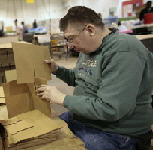

This is a tricky topic in that it seems to have attracted (some) research only in the last ten years and there is not yet any commonly used terminology for the hybrid of nonprofit organizations with commercial revenue streams. In the IC databases I was able to retrieve only a few articles in a preliminary sweep, but greater patience may be rewarded. I found the best strategy was to combine "nonprofit organizations" as a Subject (and it's available as a Subject in most databases) with other Subject terms such as "Revenue" or "Profitability" or "Commercialization" or "Business Enterprises"--depending on what's available in an individual database.
In terms of keyword phrases, a recent article calls nonprofit/profit ventures "Social Purpose Businesses" (SPB), but I haven't found this used much elsewhere. Another variation seems to be "social purpose enterprise." Given the various ways of labeling such a thing, the Subject approach described above may be the most useful.
As a place to begin you might take a look at a book in our own collection called To Profit or Not To Profit (if you open the "full record" on the right you can see the table of contents and note the various chapters on the "commercialization" of nonprofit revenues). Also take a look at these articles: "The Institutional and Technical Structuring of Nonprofit Ventures: Case Study of a U.S. Hybrid Organization Caught Between Two Fields'" and "Blending Business and Charity." Perhaps the best sounding article I found was "An Exploratory Study of Social Purpose Business Models in the United States" from just last month, but this link merely retrieves the abstract, since none of the IC databases can access the full text. It might, however, be worth putting in an Interlibrary Loan request for this one--if only for the bibliography.
In terms of keyword phrases, a recent article calls nonprofit/profit ventures "Social Purpose Businesses" (SPB), but I haven't found this used much elsewhere. Another variation seems to be "social purpose enterprise." Given the various ways of labeling such a thing, the Subject approach described above may be the most useful.
As a place to begin you might take a look at a book in our own collection called To Profit or Not To Profit (if you open the "full record" on the right you can see the table of contents and note the various chapters on the "commercialization" of nonprofit revenues). Also take a look at these articles: "The Institutional and Technical Structuring of Nonprofit Ventures: Case Study of a U.S. Hybrid Organization Caught Between Two Fields'" and "Blending Business and Charity." Perhaps the best sounding article I found was "An Exploratory Study of Social Purpose Business Models in the United States" from just last month, but this link merely retrieves the abstract, since none of the IC databases can access the full text. It might, however, be worth putting in an Interlibrary Loan request for this one--if only for the bibliography.
People with disabilities
People with disabilities--Civil rights--United States
People with disabilities--Education
Handicapped--Education (Higher)--United States
People with disabilities--Employment
Handicapped--Education (Higher)--United States
People with disabilities--Employment
People with disabilities--Employment--United States
People with disabilities--Government policy--United States
People with disabilities--Legal status, laws, etc.--United States
People with disabilities--Psychology
People with disabilities--Rehabilitation
People with disabilities--Services for
People with disabilities--Social conditions
People with disabilities--United States
Vocational rehabilitation
Developmental disabilities
Developmentally disabled
Developmentally disabled--Social conditions--Case studies
People with mental disabilities
People with mental disabilities--Services for
Mentally handicapped--Rehabilitation
Mentally handicapped--Rehabilitation
Mentally handicapped--Services for
Mentally handicapped--United States Learning disabled--Care
Learning disabled--Education
Learning disabled--Training of
Learning disabled--Vocational guidance
Learning disabled--Vocational rehabilitation--United States
Learning disabilities
Learning disabilities--United States
Vocational rehabilitation--United States
Vocational education
Vocational education--United States Handicapped
Handicapped--Civil rights--United States
Handicapped--Education--United States
Handicapped--Education--United States
Handicapped--Employment
Handicapped--Employment--United States
Handicapped--Employment--United States--Congresses
Handicapped--Legal status, laws, etc.--United States
Handicapped--Rehabilitation
Handicapped--Services for--United States
Handicapped--United States
General OneFile :
Our most user friendly database, Take advantage of the default Subject search. Among the Subject headings available here are Disabilities, Disabled Persons, Learning Disabled Persons, Mentally Disabled Persons, and Workplace Accommodation. For each of these click "View Subdivisions" where you'll find links to subheadings such as Economic Aspects, Employment, Management, Recruiting, and Training. If there isn't an exact enough subdivision offered, open all the articles and in the upper left use the "Refine results" slot for a keyword search.
ProQuest Research Library :
A comprehensive database with a lot of full text. Click "Continue" on the opening screen and at the search screen open the "More Search Options" tab on the lower left. In the Subjects slot try Disabled Workers or else Developmental Disabilities or Disabled People or Handicapped People, any of which can be combined with Employment and/or Vocational Training. Use the "Citation and Abstract" keyword searches above for any fine tuning. And note that Proquest will suggest related Subject searches at the the top of your retrievals.
Academic Search Premier :
Like General OneFile and ProQuest above, a very large multidisciplinary database with a lot of full text. Note that you can preview the "Subject Terms" above the search slots. When you find one you like, double click it to see related Subject terms. Among the Headings available here the best is probably People with Disabilities--Employment (you might also try the subheading --Vocational Guidance). Or cry combining either Developmentally Disabled or Learning Disabled as a Subject with Employment as a Subject. And you might also take a look at the Vocational Rehabilitation results.
Business Source Premier (Special Business Interface)
Similar search interface to Academic Search Premier (above), but fewer Subject Heading options--which might be a good thing. For an overview of the resources here try People with Disabilities--Employment as a Subject.
PsycINFO :
CINAHL
My favorite of our Health & Medicine resources. At the home page click on the "CINAHL Headings" button just above the search slots. The best headings here are "Employment of Disabled," "Employee, Disabled," and "Rehabilitation, Vocational." Search any of these in the Headings section and you will retrieve a list of hierarchical Headings on the left, showing you where your Heading fits in the scheme of things, and on the right it will offer you a brief selection of handy subheadings, including Education, Legislation, Psychosocial Factors, and Trends. To combine your Heading with one or more of these subheadings just check the box next to the subheading and then at the top of the page click the "Search Database" button next to the words "combine selections with or." This allows you to run a nicely targeted search without ever typing your terms into the home page search slots.
LexisNexis Academic :
News: This is our best database for 100% full text inational and local newspaper articles--and many (many) papers run articles about sustainability efforts at local colleges and universities. Don't settle for the default General "Easy Search" but instead click "News" on the left and then "All news.". Change the default "Anywhere in article" search to the "In Headline & Lead Paragraph" option for better focus. Also change the default "Major World Publications" to "US Newspapers & Wires." And finally set a date range of no more than one or two years (this is a keyword search of full text, and LexisNexis gets cranky if you retrieve more than 3000 hits).
You might begin with a broad search on (handicapped or disabled) and employ! (the exclamation mark ! is the truncation symbol here, so that employ! retrieves employ, employs, employment, and employees. You'll probably need to add more search terms for better focus, so be aware that when you retrieve a set of articles you can still add extra search terms in the "Search within results" slot on the upper right.
Law Reviews: Most issues have legal ramifications and result in court cases. In reviewing these cases, legal scholars provide analysis and discussion of a wide range of topics. Click on the "Legal" button at the the top of the LexisNexis home page to access law reviews. This is a Keyword search of full text, so use the "atleast" command to focus on sustained discussion. For example, atleast7(disabilit! and employ!) will return only articles in which these words are used at least 7 times--an indication that they are a central concern (! is the truncation symbol in this database, so that employ!, for example, retrieves employees, employers, and employment). Also try ADA or the Americans with Disabilities Act. And use the date limit to search just the last 5 or 10 years.
Our most user friendly database, Take advantage of the default Subject search. Among the Subject headings available here are Disabilities, Disabled Persons, Learning Disabled Persons, Mentally Disabled Persons, and Workplace Accommodation. For each of these click "View Subdivisions" where you'll find links to subheadings such as Economic Aspects, Employment, Management, Recruiting, and Training. If there isn't an exact enough subdivision offered, open all the articles and in the upper left use the "Refine results" slot for a keyword search.
ProQuest Research Library :
A comprehensive database with a lot of full text. Click "Continue" on the opening screen and at the search screen open the "More Search Options" tab on the lower left. In the Subjects slot try Disabled Workers or else Developmental Disabilities or Disabled People or Handicapped People, any of which can be combined with Employment and/or Vocational Training. Use the "Citation and Abstract" keyword searches above for any fine tuning. And note that Proquest will suggest related Subject searches at the the top of your retrievals.
Academic Search Premier :
Like General OneFile and ProQuest above, a very large multidisciplinary database with a lot of full text. Note that you can preview the "Subject Terms" above the search slots. When you find one you like, double click it to see related Subject terms. Among the Headings available here the best is probably People with Disabilities--Employment (you might also try the subheading --Vocational Guidance). Or cry combining either Developmentally Disabled or Learning Disabled as a Subject with Employment as a Subject. And you might also take a look at the Vocational Rehabilitation results.
Business Source Premier (Special Business Interface)
Similar search interface to Academic Search Premier (above), but fewer Subject Heading options--which might be a good thing. For an overview of the resources here try People with Disabilities--Employment as a Subject.
PsycINFO :
The American Psychological Association use their own Subject vocabulary (called "Descriptors"), so a visit to the "Thesaurus" below the search slots is a good idea. If you find an article on exactly what you want, be sure to check the assigned "Descriptors" on the right of the citation for more ideas about useful search terms. Among the Descriptors used here are Disabilities, Developmental Disabilities, Learning Disorders, and Mental Retardation, any of which you can combine with the Descriptors Employability or Employment Status. And note: this is one of the few databases where the Subject/Descriptor "Supported Employment" is available.
PsycINFO deals only with scholarly literature, much of it assuming a graduate-level understanding of the discipline. But among these you may find interesting, accessible articles on your topic.
User Advisory: If what you're searching for are "journal articles only" in "English," it's a good idea to check those boxes (below the search slots). And if you want to confine your attention to Iraq and Afghan veterans, set the date limit accordingly.
SocINDEX with Full Text
As the name implies, an excellent database for social issues. Click on the "Subject Terms" link above the search slots to find which Subject Headings will work here. Double click any Heading for a list of broader, narower, and related Subject Terms. Among the best Headings available here are Vocational Rehabilitation and People with Disabilities--Employment.
PsycINFO deals only with scholarly literature, much of it assuming a graduate-level understanding of the discipline. But among these you may find interesting, accessible articles on your topic.
User Advisory: If what you're searching for are "journal articles only" in "English," it's a good idea to check those boxes (below the search slots). And if you want to confine your attention to Iraq and Afghan veterans, set the date limit accordingly.
ScienceDirect :
Because it’s a large database with a great deal of full text, the absence of Subject searching means that your Keyword searches will often retrieve large sets of articles, many of which mention but don’t discuss your search term(s). One way around this is to limit your initial search to the “Abstract Title Keyword” field. Once you have found an article that sounds on-target, click the “Related Articles” link beneath the citation For this Topic, begin with a search in the "Abstract Title" field on--disab* and (vocation* or employment) Note: * is the truncation symbol in this database so, for example, disa* retrieves disabled, disability, and disabilities.
User Advisory: Don't settle for the default "Quick Search"--open "Search" for the full range of options. Among thse you can uncheck "All books," which is recommended if you're looking for articles. And if you open the "Dates" drop-down menu you'll find a much wider range of options than the default 10 year span.
Because it’s a large database with a great deal of full text, the absence of Subject searching means that your Keyword searches will often retrieve large sets of articles, many of which mention but don’t discuss your search term(s). One way around this is to limit your initial search to the “Abstract Title Keyword” field. Once you have found an article that sounds on-target, click the “Related Articles” link beneath the citation For this Topic, begin with a search in the "Abstract Title" field on--disab* and (vocation* or employment) Note: * is the truncation symbol in this database so, for example, disa* retrieves disabled, disability, and disabilities.
User Advisory: Don't settle for the default "Quick Search"--open "Search" for the full range of options. Among thse you can uncheck "All books," which is recommended if you're looking for articles. And if you open the "Dates" drop-down menu you'll find a much wider range of options than the default 10 year span.
SocINDEX with Full Text
As the name implies, an excellent database for social issues. Click on the "Subject Terms" link above the search slots to find which Subject Headings will work here. Double click any Heading for a list of broader, narower, and related Subject Terms. Among the best Headings available here are Vocational Rehabilitation and People with Disabilities--Employment.
CINAHL
My favorite of our Health & Medicine resources. At the home page click on the "CINAHL Headings" button just above the search slots. The best headings here are "Employment of Disabled," "Employee, Disabled," and "Rehabilitation, Vocational." Search any of these in the Headings section and you will retrieve a list of hierarchical Headings on the left, showing you where your Heading fits in the scheme of things, and on the right it will offer you a brief selection of handy subheadings, including Education, Legislation, Psychosocial Factors, and Trends. To combine your Heading with one or more of these subheadings just check the box next to the subheading and then at the top of the page click the "Search Database" button next to the words "combine selections with or." This allows you to run a nicely targeted search without ever typing your terms into the home page search slots.
LexisNexis Academic :
News: This is our best database for 100% full text inational and local newspaper articles--and many (many) papers run articles about sustainability efforts at local colleges and universities. Don't settle for the default General "Easy Search" but instead click "News" on the left and then "All news.". Change the default "Anywhere in article" search to the "In Headline & Lead Paragraph" option for better focus. Also change the default "Major World Publications" to "US Newspapers & Wires." And finally set a date range of no more than one or two years (this is a keyword search of full text, and LexisNexis gets cranky if you retrieve more than 3000 hits).
You might begin with a broad search on (handicapped or disabled) and employ! (the exclamation mark ! is the truncation symbol here, so that employ! retrieves employ, employs, employment, and employees. You'll probably need to add more search terms for better focus, so be aware that when you retrieve a set of articles you can still add extra search terms in the "Search within results" slot on the upper right.
Law Reviews: Most issues have legal ramifications and result in court cases. In reviewing these cases, legal scholars provide analysis and discussion of a wide range of topics. Click on the "Legal" button at the the top of the LexisNexis home page to access law reviews. This is a Keyword search of full text, so use the "atleast" command to focus on sustained discussion. For example, atleast7(disabilit! and employ!) will return only articles in which these words are used at least 7 times--an indication that they are a central concern (! is the truncation symbol in this database, so that employ!, for example, retrieves employees, employers, and employment). Also try ADA or the Americans with Disabilities Act. And use the date limit to search just the last 5 or 10 years.
- Challenge: Challenge provides two of the best online resource gateways: General Disability Resources and Specific Disability Resources.
- Worksupport.com: from the Rehabilitation Research and Training Center at Virginia Commonwealth University, this is an outstanding resource for full-text content on relevant issues. Open any of the linked categories and then explore the types of "Research" materials on the left--especially Articles and Case Studies (and be patient: some of these links are slow moving).
- Office of Disability Employment Policy: from the Department of Labor, explore all the links here, especially those along the left margin (and most especially those under Resources).
- Disability.gov: Employment: Note all the topical subheadings for Employment on the left. Also make use of the Civil Rights, Community Life, and Education categories. And note their New York State resources for Employment and Community Life.
- Employment & Disability Institute: Just a couple of miles away at Cornell's ILR School, much of their information is even closer--linked from this site.
- National Business & Disability Council: Much of the content requires membership, which seems to be restricted to potential employers, but the "In the News" links are free, and note the links to "Legislation Update," "In the Courts," and "Success Stories" on the left.
- New York State Education Department: Vocational and Educational Services for Individuals with Disabilities: Vocational Rehabilitation Publications: A lot of linked content here. And while at this site be sure to click on the Funding tab.
- U.S. Department of Education: Office of Special Education and Rehabilitative Services: National Institute on Disability and Rehabilitation Research: Look at "Grants and Funding," "Publications and Products," and "Research and Statistics."
- Disability Resources on the Internet: good gateway site. Scroll down to the links for "Employment" and "Grants and Grant Writing" on the right. Also be sure to visit their page of linked resources for New York State.
- National Rehabilitation Information Center: Very comprehensive site--enter Public, Researchers, or NIDRR.
- U.S. Disability Statistics: from Cornell University, find all the data you need by creating a "new account" for yourself (free). This also gives you access to the latest (2007) Disability Status Reports.
Web Directories differ from search engines like Google in that all the online resources have been selected and annotated by editors, thereby promising a much higher degree of quality control. The two best should prove useful in their categorization of Sustainability resources:
- Open Directory Project: Disabled: Employment
- Intute: Physical and Learning Disabilities (international perspective)
- About.com: How to accommodate Disabled Employees (see links)
Google Advanced Search: When doing research on the Web, always use the Adanced Search version of Google. This not only provides more flexibility in entering search terms, but more importantly it allows you to target the Web domains that are likely to provide the most authoritative information.
Under "Need More Tools?" you will find the "Search within a site or domain" slot. You may enter only one domain at a time, but it's worth targeting each of the three domains likely to supply the best information: colleges and universities (enter the "edu" tag), nonprofit organizations (enter the "org" tag), and the United States government (enter the "gov" tag).
Under "Need More Tools?" you will find the "Search within a site or domain" slot. You may enter only one domain at a time, but it's worth targeting each of the three domains likely to supply the best information: colleges and universities (enter the "edu" tag), nonprofit organizations (enter the "org" tag), and the United States government (enter the "gov" tag).
- MLA citation for books: in print, from databases, on the Web
- MLA citation for articles: in print, from databases, on the Web.
- MLA citation for Web and Multimedia resources, including Web sites, movies, DVDs, CDs, and videos.
- MLA in-text (parenthetical) citation (far less satanic than the first three).
