
You Can't Take It With You: Support Guide

You Can't Take It With You: 2014 Broadway Revival
Hart, Moss, 1904-1961
Kaufman, George S. (George Simon), 1889-1961--Biography
Kaufman, George S. (George Simon), 1889-1961--Criticism and interpretation
You Can't Take It With You [DVD of the 1938 film version]
Theater--New York (State)--New York--History
Theater--New York (State)--New York--History--20th century
Broadway (New York, N.Y.)
Broadway (New York, N.Y.)--History
Theater--United States--History--20th century
Algonquin Round Table--Drama
Nineteen twenties
Nineteen thirties
United States--History--1919-1933
United States--History--1933-1945
Depressions--1929--United States
United States--Economic conditions--1918-1945
Note: Grandpa Vanderhof admits to an income of $3000-$4,000 from "property." The median American income in 1936 was about $1,400.
United States--Economic policy--1933-1945
United States. Internal Revenue Service
Income tax--United States--History
Also see Personal income taxation : the definition of income as a problem of fiscal policy (1938) and Income tax, root of all evil
Wall Street--History
Wall Street (New York, N.Y.)--History
Banks and banking--United States--History
Banks and banking--United States--History--20th century
New Deal, 1933-1939
Public welfare--United States--History--20th century
See esp. The American dole : unemployment relief and the welfare state in the Great Depression
United States. Work Projects Administration [WPA]
United States--Politics and government--1933-1945
Roosevelt, Franklin D. (Franklin Delano), 1882-1945
Roosevelt, Eleanor, 1884-1962
United States--Social conditions--1918-1932
United States--Social conditions--1933-1945
African Americans--History--1877-1964
African Americans--Social conditions--To 1964
African Americans--New York (State)--New York--Social conditions--20th century
United States--Social life and customs--1918-1945
United States--Civilization--1918-1945
United States--Intellectual life--20th century
Popular culture--United States--History--20th century
Astaire, Fred
Rogers, Ginger, 1911-
Porgy & Bess [DVD]
Porgy and Bess [CD]
Also see The strange career of Porgy and Bess : race, culture, and America's most famous opera
The last days of Pompeii
The Good Earth [novel]
The Good Earth [film]
The American scene, [by Edwin C. Hill]
Spiritualism--History--20th century
Spiritualism--United States--History
United States. Federal Bureau of Investigation--History--20th century [G-Men]
New York (N.Y.)--History--1898-1951
New York (N.Y.)--History--20th century
New York (N.Y.)--Civilization
New York (N.Y.)--Description and travel
New York (N.Y.)--Economic conditions
New York (N.Y.)--Emigration and immigration
New York (N.Y.)--Intellectual life
New York (N.Y.)--Intellectual life--20th century
New York (N.Y.)--Moral conditions--History--20th century
New York (N.Y.)--Politics and government--1898-1951
New York (N.Y.). Police Dept.--History
New York (N.Y.)--Social conditions--20th century
New York (N.Y.)--Race relations--History--20th century
New York (N.Y.)--Social life and customs
New York (N.Y.)--Social life and customs--20th century
Columbia University--History
Department stores--United States--History
Russia--History--1904-1914.
Romanov, House of
Russia--Court and courtiers
Soviet Union--History--Revolution, 1917-1921
Soviet Union--History--Revolution, 1917-1921--Personal narratives
Rasputin, Grigori Efimovich, ca. 1870-1916
Trotsky, Leon, 1879-1940
Stalin, Joseph, 1879-1953
Soviet Union--Economic conditions--1917-1945 [Five Year Plans]
Soviet Union--Social conditions--1917-1945
Soviet Union--History--Revolution, 1917-1921--Refugees
Soviet Union--Emigration and immigration
Immigrants--New York (State)--New York--History
Immigrants--New York (State)--New York--History--20th century
Kaufman, George S. (George Simon), 1889-1961--Biography
Kaufman, George S. (George Simon), 1889-1961--Criticism and interpretation
You Can't Take It With You [DVD of the 1938 film version]
Theater--New York (State)--New York--History
Theater--New York (State)--New York--History--20th century
Broadway (New York, N.Y.)
Broadway (New York, N.Y.)--History
Theater--United States--History--20th century
Algonquin Round Table--Drama
Nineteen twenties
Nineteen thirties
United States--History--1919-1933
United States--History--1933-1945
Depressions--1929--United States
United States--Economic conditions--1918-1945
Note: Grandpa Vanderhof admits to an income of $3000-$4,000 from "property." The median American income in 1936 was about $1,400.
United States--Economic policy--1933-1945
United States. Internal Revenue Service
Income tax--United States--History
Also see Personal income taxation : the definition of income as a problem of fiscal policy (1938) and Income tax, root of all evil
Wall Street--History
Wall Street (New York, N.Y.)--History
Banks and banking--United States--History
Banks and banking--United States--History--20th century
New Deal, 1933-1939
Public welfare--United States--History--20th century
See esp. The American dole : unemployment relief and the welfare state in the Great Depression
United States. Work Projects Administration [WPA]
United States--Politics and government--1933-1945
Roosevelt, Franklin D. (Franklin Delano), 1882-1945
Roosevelt, Eleanor, 1884-1962
United States--Social conditions--1918-1932
United States--Social conditions--1933-1945
African Americans--History--1877-1964
African Americans--Social conditions--To 1964
African Americans--New York (State)--New York--Social conditions--20th century
United States--Social life and customs--1918-1945
United States--Civilization--1918-1945
United States--Intellectual life--20th century
Popular culture--United States--History--20th century
Astaire, Fred
Rogers, Ginger, 1911-
Porgy & Bess [DVD]
Porgy and Bess [CD]
Also see The strange career of Porgy and Bess : race, culture, and America's most famous opera
The last days of Pompeii
The Good Earth [novel]
The Good Earth [film]
The American scene, [by Edwin C. Hill]
Spiritualism--History--20th century
Spiritualism--United States--History
United States. Federal Bureau of Investigation--History--20th century [G-Men]
New York (N.Y.)--History--1898-1951
New York (N.Y.)--History--20th century
New York (N.Y.)--Civilization
New York (N.Y.)--Description and travel
New York (N.Y.)--Economic conditions
New York (N.Y.)--Emigration and immigration
New York (N.Y.)--Intellectual life
New York (N.Y.)--Intellectual life--20th century
New York (N.Y.)--Moral conditions--History--20th century
New York (N.Y.)--Politics and government--1898-1951
New York (N.Y.). Police Dept.--History
New York (N.Y.)--Social conditions--20th century
New York (N.Y.)--Race relations--History--20th century
New York (N.Y.)--Social life and customs
New York (N.Y.)--Social life and customs--20th century
Columbia University--History
Department stores--United States--History
Russia--History--1904-1914.
Romanov, House of
Russia--Court and courtiers
Soviet Union--History--Revolution, 1917-1921
Soviet Union--History--Revolution, 1917-1921--Personal narratives
Rasputin, Grigori Efimovich, ca. 1870-1916
Trotsky, Leon, 1879-1940
Stalin, Joseph, 1879-1953
Soviet Union--Economic conditions--1917-1945 [Five Year Plans]
Soviet Union--Social conditions--1917-1945
Soviet Union--History--Revolution, 1917-1921--Refugees
Soviet Union--Emigration and immigration
Immigrants--New York (State)--New York--History
Immigrants--New York (State)--New York--History--20th century
Note:Comedy tends not to get the same critical attention or respect as drama, so despite the Pulitzers Kaufman and Hart have not received a great deal of critical attention. For example, an "Author's Work" search on You Can't Take It With You in the MLA International Bibliography--the largest bibliograrphy of literary criticism--retrieves 2 hits, one of which is about the 1938 movie version.
International Bibliography of Theatre and Dance with Full Text : You can run Subject searches on play titles here by searching them in the Reviews & Products field and following it with the term "theatrical production." This is worth the trouble since searching a play title as a Subject guarantees that the articles retrieved will be substantially about the the play.
Names are best searched, last name first, as "People." If a People search doesn't generate enough hits, try searching the name as a keyword phrase--the name in its natural order, enclosed in quotation marks.
If both Subject and Keyword searches don't score many retrievals, try searching your term in the "All Text" field. But only use this as a last resort, since it will retrieve articles in which your search term is merely mentioned in passing.
Although the critical literature on Hart and Kaufman is scant, IBTD comes up with the most hits.
MLA International Bibliography provides the most complete and fully indexed coverage of articles and books on modern literatures, linguistics, folklore, rhetoric, and composition from 1925 to the present. There is ample full text provided by ProQuest, as well as links to full-text articles in JSTOR and Project Muse. Full text from other IC databases is also readily available via the "GetIt" links below article citations.
Because books, book chapters/essays, and dissertations will usually not be available full text, you may wish to limit your search to "Journal article" under "Source type."
"Author's Work" and "Author as Subject" will be especially helpful search fields at finding literary criticism. And for additional search field options either click on "Show more fields," or, for the complete list, open the drop-down menus to the right of the "Anywhere" default for the top three rows of search slots. This list includes both "Literary Influence"--who influenced a particular author you have entered--and "Literary Source"--who was influenced by that particular author.
JSTOR has excellent 100% full-text coverage of literary scholarship. There is no Subject searching, so remember to put titles and authors' names in quotation marks to search them as Keyword phrases--and leave authors' names in the normal first-name last-name order. Set "Limit" to "Article"--or else you may unleash an avalanche of reviews of books on your topic.
JSTOR access to journal articles begins 2-4 years prior to the present--so don't look for any criticism from the last couple of years--but coverage always extends back to the first issue of each journal--in some cases into the 19th century and beyond.
Project Muse , although a smaller database, it complements JSTOR. LIke JSTOR it provides 100% full text of mostly scholarly journals, but its coverage is entirely current--mainly spanning the last 10-15 years. Muse offers a basic keyword search (be sure to put the titles of literary works in quotation marks). Once you've retrieved a set of articles you can sort them into broad categories using the Research Area options on the left.
Note: Checking the "Articles" box under Content Type before you run a search will eliminate reviews of books about your topic and leave you with just the articles on your topic.
ProQuest Research Library & Academic Search Premier are comprehensive databases and include considerable literary criticism--much of it full text. In running searches on authors, don't settle for a Keyword search on the author's name, as this will retrieve too many articles in which the author is only mentioned in passing. Instead use the specialized Subject search each provides. In ProQest enter the name, last name first, in the "Person" slot. In Academic Search Premier open the "Select a Field" drop down menu and search the name, last name first, in the "People" field.
In ProQuest the titles of literary works must be searched as Keyword phrases, so be sure to put them in quotation marks. In Academic Search Premier search the title of a play followed by the words "Theatrical production" in the "Reviews and Products" field.
General OneFile is another comprehensive database with considerable literary criticism, but the default Subject search forcess you to retrieve EVERYTHING on a particular author. The standard "subdivisions" by which General OneFile organizes these results--"Ethical Aspects," Political Aspects," "Social Aspects"--are broad in respect to authors.
If you wish to focus on a particular a theme, the best strategy is to open all the results from the initial Subject search and then use the the "Search within these Results" slot at the upper left to enter thematic Keywords.
If you wish to focus on a specific literary work, open "Advanced Search" and in the "Select Index" box choose "Named Work": this allows you to run a Subject search on a title.
New York Times (1851-2009) offers the full text of the New York Times from 1851 up to 2006, so you can access contemporary reviews of most of O'Neill's plays and follow his career as a public figure. Enter a Keyword search, putting phrases in quotation marks--for example "Ah, Wilderness.". If the database opens to an Anywhere search, change the search field to “Anywhere except full text.” Only if this doesn’t yield enough results, expand to the “Anywhere” field.
George S. Kaufman and Moss Hart were sufficiently written about in the New York press over the entire course of their careers that you may want to target particular decades by using the date range limits below the search slots. For instance, if you set a date range of 1920 to 1940 and search "George S, Kaufman" or "Moss Hart" you retrieve articles on Kaufman beinning in 1921 and articles on Hart beginning in 1930. (Note: Kaufman was always referred to as "George S. Kaufman" in the New York press, so you must include the middle initial in a keyword search.) Or set a date range of 1936 to 1937 and search "You Can't Take It With You" for articles relating to the original production.
America: History and Life : For research on some aspect of American society in 1906, this database may be especially useful since it allows you to set a "Historical Period" limit (below the search slots on the left). If you set this for 1890-1920, any Subjects or Keywords you enter above will retrieve articles on that topic as it played out during that 30-year period. But: be aware that setting a Period limit of 1920-1940 will also retrieve any Period that contains those 30 years: 1850-1950.
Be sure to set the "Document Type" limit to "Article" to weed out all the many book reviews that will otherwise clot your search for articles.
Literary Reference Center : You can find some very basic reference book entries for You Can't Take It With You, George Kaufman, and Moss Hart here.
International Bibliography of Theatre and Dance with Full Text : You can run Subject searches on play titles here by searching them in the Reviews & Products field and following it with the term "theatrical production." This is worth the trouble since searching a play title as a Subject guarantees that the articles retrieved will be substantially about the the play.
Names are best searched, last name first, as "People." If a People search doesn't generate enough hits, try searching the name as a keyword phrase--the name in its natural order, enclosed in quotation marks.
If both Subject and Keyword searches don't score many retrievals, try searching your term in the "All Text" field. But only use this as a last resort, since it will retrieve articles in which your search term is merely mentioned in passing.
Although the critical literature on Hart and Kaufman is scant, IBTD comes up with the most hits.
MLA International Bibliography provides the most complete and fully indexed coverage of articles and books on modern literatures, linguistics, folklore, rhetoric, and composition from 1925 to the present. There is ample full text provided by ProQuest, as well as links to full-text articles in JSTOR and Project Muse. Full text from other IC databases is also readily available via the "GetIt" links below article citations.
Because books, book chapters/essays, and dissertations will usually not be available full text, you may wish to limit your search to "Journal article" under "Source type."
"Author's Work" and "Author as Subject" will be especially helpful search fields at finding literary criticism. And for additional search field options either click on "Show more fields," or, for the complete list, open the drop-down menus to the right of the "Anywhere" default for the top three rows of search slots. This list includes both "Literary Influence"--who influenced a particular author you have entered--and "Literary Source"--who was influenced by that particular author.
JSTOR has excellent 100% full-text coverage of literary scholarship. There is no Subject searching, so remember to put titles and authors' names in quotation marks to search them as Keyword phrases--and leave authors' names in the normal first-name last-name order. Set "Limit" to "Article"--or else you may unleash an avalanche of reviews of books on your topic.
JSTOR access to journal articles begins 2-4 years prior to the present--so don't look for any criticism from the last couple of years--but coverage always extends back to the first issue of each journal--in some cases into the 19th century and beyond.
Project Muse , although a smaller database, it complements JSTOR. LIke JSTOR it provides 100% full text of mostly scholarly journals, but its coverage is entirely current--mainly spanning the last 10-15 years. Muse offers a basic keyword search (be sure to put the titles of literary works in quotation marks). Once you've retrieved a set of articles you can sort them into broad categories using the Research Area options on the left.
Note: Checking the "Articles" box under Content Type before you run a search will eliminate reviews of books about your topic and leave you with just the articles on your topic.
ProQuest Research Library & Academic Search Premier are comprehensive databases and include considerable literary criticism--much of it full text. In running searches on authors, don't settle for a Keyword search on the author's name, as this will retrieve too many articles in which the author is only mentioned in passing. Instead use the specialized Subject search each provides. In ProQest enter the name, last name first, in the "Person" slot. In Academic Search Premier open the "Select a Field" drop down menu and search the name, last name first, in the "People" field.
In ProQuest the titles of literary works must be searched as Keyword phrases, so be sure to put them in quotation marks. In Academic Search Premier search the title of a play followed by the words "Theatrical production" in the "Reviews and Products" field.
General OneFile is another comprehensive database with considerable literary criticism, but the default Subject search forcess you to retrieve EVERYTHING on a particular author. The standard "subdivisions" by which General OneFile organizes these results--"Ethical Aspects," Political Aspects," "Social Aspects"--are broad in respect to authors.
If you wish to focus on a particular a theme, the best strategy is to open all the results from the initial Subject search and then use the the "Search within these Results" slot at the upper left to enter thematic Keywords.
If you wish to focus on a specific literary work, open "Advanced Search" and in the "Select Index" box choose "Named Work": this allows you to run a Subject search on a title.
New York Times (1851-2009) offers the full text of the New York Times from 1851 up to 2006, so you can access contemporary reviews of most of O'Neill's plays and follow his career as a public figure. Enter a Keyword search, putting phrases in quotation marks--for example "Ah, Wilderness.". If the database opens to an Anywhere search, change the search field to “Anywhere except full text.” Only if this doesn’t yield enough results, expand to the “Anywhere” field.
George S. Kaufman and Moss Hart were sufficiently written about in the New York press over the entire course of their careers that you may want to target particular decades by using the date range limits below the search slots. For instance, if you set a date range of 1920 to 1940 and search "George S, Kaufman" or "Moss Hart" you retrieve articles on Kaufman beinning in 1921 and articles on Hart beginning in 1930. (Note: Kaufman was always referred to as "George S. Kaufman" in the New York press, so you must include the middle initial in a keyword search.) Or set a date range of 1936 to 1937 and search "You Can't Take It With You" for articles relating to the original production.
America: History and Life : For research on some aspect of American society in 1906, this database may be especially useful since it allows you to set a "Historical Period" limit (below the search slots on the left). If you set this for 1890-1920, any Subjects or Keywords you enter above will retrieve articles on that topic as it played out during that 30-year period. But: be aware that setting a Period limit of 1920-1940 will also retrieve any Period that contains those 30 years: 1850-1950.
Be sure to set the "Document Type" limit to "Article" to weed out all the many book reviews that will otherwise clot your search for articles.
Literary Reference Center : You can find some very basic reference book entries for You Can't Take It With You, George Kaufman, and Moss Hart here.
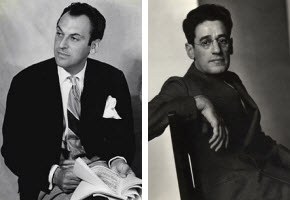
Moss Hart George S. Kaufman
Original 1936 cast

- Ebrary
- Citation
- Interlibrary Loan
- Plagiarism Tutorial
You Can't Take It With You: from the Playbill Vault, this site offers images and information abou the original 1936 production at the Booth Theatre.
You Can't Take It With You: Entry at the Internet Broadway Database, with linked information on all the personnel involved in the original 1936 production.
You Can't Take It With You: Online play and production guide posted by the 2014 revival. This is a feature at the revival's official Web site.
You Can't Take It With You: A Study guide produced by the Utah Shakespeare Festival for their production.
You Cant Take It With You: An online support site for a University of Wisconsin porduction, this offers a production history and historical context for the play.
You Can't Take It With You: from the Stage Whispers Web site, scroll down for very detailed information and images for all the cast of the original production,
You Can't Take It With You: An Alley Theatre "Companion" to a 2013 production--with discussion tips for engaging young audiences. (Takes a few moments to load.)
George S. Kaufman: This Web site is maintained by his daughter and includes a biography, career overview, and information on all his plays.
George S Kaufman: A very comprehensive listing of Kaufman's theatre career with links to individual productions, from the Playbill Vault.
No, Mr. Kaufman, Satire Lives on, If It's Yours: a lengthy 2009 New York Times overview of Kaufman's career and influence.
George S Kaufman on video: These are YouTube videos of a 1953 panel show that Kaufman appeared on. Part I Part II
Moss Hart: Biographical essay from the American Society of Authors and Writers.
Interview with Moss Hart's Son: The focus here is on You Can't Take It With You.
He'd Rather Be Right: 2012 article in Vanity Fair discussing the "secret" diary that Hart kept, which provides a darker perspective on his life and relationship with Kaufman.
And of course there are Wikipedia articles for Kaufman, Hart, and You Can't take It With You.
You Can't Take It With You: Entry at the Internet Broadway Database, with linked information on all the personnel involved in the original 1936 production.
You Can't Take It With You: Online play and production guide posted by the 2014 revival. This is a feature at the revival's official Web site.
You Can't Take It With You: A Study guide produced by the Utah Shakespeare Festival for their production.
You Cant Take It With You: An online support site for a University of Wisconsin porduction, this offers a production history and historical context for the play.
You Can't Take It With You: from the Stage Whispers Web site, scroll down for very detailed information and images for all the cast of the original production,
You Can't Take It With You: An Alley Theatre "Companion" to a 2013 production--with discussion tips for engaging young audiences. (Takes a few moments to load.)
George S. Kaufman: This Web site is maintained by his daughter and includes a biography, career overview, and information on all his plays.
George S Kaufman: A very comprehensive listing of Kaufman's theatre career with links to individual productions, from the Playbill Vault.
No, Mr. Kaufman, Satire Lives on, If It's Yours: a lengthy 2009 New York Times overview of Kaufman's career and influence.
George S Kaufman on video: These are YouTube videos of a 1953 panel show that Kaufman appeared on. Part I Part II
Moss Hart: Biographical essay from the American Society of Authors and Writers.
Interview with Moss Hart's Son: The focus here is on You Can't Take It With You.
He'd Rather Be Right: 2012 article in Vanity Fair discussing the "secret" diary that Hart kept, which provides a darker perspective on his life and relationship with Kaufman.
And of course there are Wikipedia articles for Kaufman, Hart, and You Can't take It With You.
The most complete resource for set and costume design resources at the IC Library is my guide for Theatrical Design. Note especially the Subject searches for
Finally, the Library has bound volumes of all the Life Magazines for 1937-1939 and all the Vanity Fairs for 1930-1936. Life, which specialized in photojournalism, could be a valuable resource for dress and architecture and interior decor in the late 30s.
Note: Life is shelved at the beginning of the bound periodicals on the Tower side of the 4th floor. Tthe + sign at the end of the Vanity Fair call number indicates that it's an oversized volume and is shleved in that section on the 5th floor..
- Architecture, Domestic--United States
- Clothing and dress--United States--History--20th century
- New York (N.Y.)--Buildings, structures, etc.
- Architecture, Domestic--New York (State)--New York
- Neighborhoods--New York (State)--New York
Finally, the Library has bound volumes of all the Life Magazines for 1937-1939 and all the Vanity Fairs for 1930-1936. Life, which specialized in photojournalism, could be a valuable resource for dress and architecture and interior decor in the late 30s.
- Life (1937-2000): AP2 .L548
- Vanity Fair (1913-1936): AP2 .V32+
Note: Life is shelved at the beginning of the bound periodicals on the Tower side of the 4th floor. Tthe + sign at the end of the Vanity Fair call number indicates that it's an oversized volume and is shleved in that section on the 5th floor..
These are articles from the IC Library's JSTOR database, all written during the 30s and touching on context for and themes of You Can't Take It With You. (Log-in--IC email user name and password--required)
- The World-Wide Depression of 1930 (1931)
- The Challenge of the Continuing Depression (1934)
- Democracy and Depressions (1932)
- What Shall We Do About Depressions? (1938)
- Impressions of the American State of Mind (1934)
- Research with Relief Funds--Past, Present and Future (1936)
- Households and Persons Receiving Relief or Assistance (1938)
- Various Government Provisions for the Unemployed (1939)
- The Cultural Projects of the WPA (1939)
- Size and Composition of American Families (1937)
- Is the American Family Solvent? (1933)
- The American Family Income and Prosperity (1933)
- The Place of Personal Income Taxes in a Modern Fiscal System (1936)
- The Russian Revolution of 1917 (1930)
- Leon Trotsky and the Natural History of Revolutions (1938)
- The Second Five Year Plan (1932)
- The Russians in the United States (1939)
- The Problem of the Negro and European Immigrant Minorities: Some Comparisons and Contrasts (1939)
- Race Discrimination and Negro Personality (1934)
- Social Planning for the Negro, Past and Present (1936)
- Spiritualism. A Contemporary American Religion (1930)
- The Department Store-A Problem of Elephantiasis (1937)
- Fireworks Danger Appears In Several New Forms (1936)
