
Academic Freedom
- What is Academic Freedom?
- Profs. Cheyfitz and Jacobson
- American Studies Association (ASA)
- What is BDS?
- Journal of Academic Freedom v. 4 2013
- Legal Implications
- Selected Reading
- Selected Library Books
- Contact Us
- Dashboard
- Ithaca College: Academic Freedom
- College Presidents Respond
- Organizations
- Background Sources
- Guide Credits
- Freedom to think, write and to speak
Many colleges and universities adapt the standards from the American Association of University Professors (AAUP) on Academic Freedom. The AAUP proposes that, "...institutions of higher education are conducted for the common good and not to further the interest of either the individual teacher or the institution as a whole. The common good depends upon the free search for truth and its free exposition" (1940 Statement of Principles on Academic Freedom and Tenure)." In 2013 they adopted the “Recommended Institutional Regulations on Academic Freedom and Tenure.”
Ithaca College hosted a talk by Eric Cheyfitz, the Ernest I. White Professor of American Studies and Humane Letters at Cornell University, on “Academic Freedom and the American Studies Association Academic Boycott of Israel.” His presentation, which is free and open to the public, took place on Tuesday, Feb. 25, at 7 p.m. in Klingenstein Lounge, Egbert Hall.
Cheyfitz is a member of the American Studies Association (ASA), which voted last December to endorse a resolution supporting an academic and cultural boycott of Israel. Several academic organizations have called for such a boycott in protest of Israel’s treatment of Palestinians and what they consider the involvement of Israeli universities in supporting government policy. The ASA is the nation’s oldest and largest association devoted to the interdisciplinary study of American culture and history.
A supporter of the boycott decision, Cheyfitz teaches courses on American literatures, American Indian literatures and federal Indian law. From 2008–11 he served as director of Cornell’s American Indian Program. Read his Cornell University profile.
His talk is cosponsored by the Ithaca College Center for the Study of Culture, Race, and Ethnicity; the Departments of English and Politics; and the Park Center for Independent Media. For more information, contact Beth Harris, associate professor of politics, at [email protected].
Cheyfitz is a member of the American Studies Association (ASA), which voted last December to endorse a resolution supporting an academic and cultural boycott of Israel. Several academic organizations have called for such a boycott in protest of Israel’s treatment of Palestinians and what they consider the involvement of Israeli universities in supporting government policy. The ASA is the nation’s oldest and largest association devoted to the interdisciplinary study of American culture and history.
A supporter of the boycott decision, Cheyfitz teaches courses on American literatures, American Indian literatures and federal Indian law. From 2008–11 he served as director of Cornell’s American Indian Program. Read his Cornell University profile.
His talk is cosponsored by the Ithaca College Center for the Study of Culture, Race, and Ethnicity; the Departments of English and Politics; and the Park Center for Independent Media. For more information, contact Beth Harris, associate professor of politics, at [email protected].
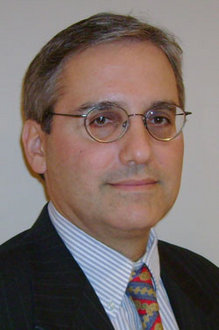 Ithaca College hosted a talk by William A. Jacobson, a clinical professor of law and director of the Securities Law Clinic at the Cornell University Law School, on “The Case for Israel and Academic Freedom.” His presentation, which is free and open to the public, took place on Tuesday, Feb. 25, at 8 p.m. in Clark Lounge, Egbert Hall. If you missed it, you can watch it on YouTube.
Jacobson is the founder and publisher of two popular websites, Legal Insurrection and College Insurrection. Legal Insurrection is at the forefront of opposing the academic boycott of Israel and has filed a challenge to the tax exempt status of the American Studies Association, which voted in December to endorse a resolution supporting an academic and cultural boycott of Israel.
Prior to joining the Cornell law faculty in 2007, Jacobson had a highly successful civil litigation and arbitration practice, concentrating in investment, employment and business disputes in the securities industry. He is quoted frequently in national media on issues related to investment fraud and investor protection. He earned his law degree from Harvard Law School, where he served as senior editor of the Harvard International Law Journal and director of litigation for the Harvard Prison Legal Assistance Project. Read his Cornell University Profile
Jacobson’s talk is sponsored by the Jewish studies program and Hillel at Ithaca College. For more information, contact Hillel director Igor Khokhlov [email protected].
American Studies Association (homepage) "The American Studies Association is the nation’s oldest and largest association devoted to the interdisciplinary study of American culture and history"
- ASA Members Vote To Endorse Boycott of Israeli Academic Institutions (February 8, 2014) lede, "The members of the American Studies Association have endorsed the Association’s participation in a boycott of Israeli academic institutions. In an election that attracted 1252 voters, the largest number of participants in the organization’s history, 66.05% of voters endorsed the resolution, while 30.5% of voters voted no and 3.43% abstained. The election was a response to the ASA National Council’s announcement on December 4 that it supported the academic boycott and, in an unprecedented action to ensure a democratic process, asked its membership for their approval. Please see the ASA website for a collection of supporting documents. "
- Letter from ASA President to Association Members
- Council Resolution on the Boycott of Israeli Academic Institutions
- Council Statement on the Resolution
- What Does the Boycott of Israeli Academic Institutions Mean for the ASA?
- Frequently Asked Questions about the Academic Boycott (PDF)
- Sample Letter to Administrators (PDF)
- Please note that only association members may post comments here. Others may follow the American Studies Association on Facebook
-
Press Release: Rights Groups Call on Universities to Protect Open Debate on Palestine/Israel
- AAUP Opposes Anti-Boycott Legislation in Maryland and New York
- Middle East Studies Association Opposes Anti-Boycott Legislation in Maryland
- ASA Condemns Attempts by NY State Legislature to Suppress Boycotts of Israel as Unlawful Infringement on Free Speech
- Victory in Albany: New York State Assembly Withdraws Bill to Limit Boycotts of Israeli Academic Institutions
- Thanks to Jewish Voice for Peace, all of the major documents and statements related to the fight against the anti-boycott bill in Albany are now all in one place. Click here to see what’s posted.
- Chill on Speech: New York Times Editorial against NY Anti-Boycott Bill
- New Yorkers Fight to Protect First Amendment Rights and Academic Freedom
- Chronicle of Higher Education: The Sound of Silencing in American Academe
- Letter of Support to the ASA from the Arab American Studies Association
- Statement of Support for the American Studies Association by Palestinian and Other Arab-American Scholars and Writers
- Letter: Middle East Studies Association to Indiana University President, Expressing Concerns about Academic Freedom at IU
- Open Letter to University of Minnesota President Eric Kaler: Boycott of Israeli Academic Institutions
- Letter: CCR, PSLS Responds to Lawsuit Threat Against ASA, Calling It “Baseless”
- CCR, PSLS Say Lawsuit Threat Against ASA is Legal Bullying
- Indiana University Faculty Request Your Support
- ASA Turpie Award Winners in Opposition to Boycott of Israeli Academic Institutions Resolution
What is the BDS movement? BDS is an acronym for: Boycott, Divestment &Sanctions.;
Here is the description from their website:
Here is the description from their website:
- BDS Movement: Freedom Justice Equality. From the "Learn" tab, "The global movement for a campaign of Boycott, Divestment and Sanctions (BDS) against Israel until it complies with international law and Palestinian rights was initiated by Palestinian civil society in 2005, and is coordinated by the Palestinian BDS National Committee (BNC), established in 2007. BDS is a strategy that allows people of conscience to play an effective role in the Palestinian struggle for justice."
- BDS Movement: Academic Boycott This tab provides a history of PACBI; they refer to www.PACBI.org for more information.
Journal of Academic Freedom (AAUP)
- Journal of Academic Freedom: Table of Contents Volume 4. All essays are in .pdf format.
- Editor's Introduction By Ashley Dawson
- Rethinking Academic Boycotts By Marjorie Heins
- Palestine, Boycott, and Academic Freedom: A Reassessment Introduction By Bill V. Mullen
- Boycott, Academic Freedom, and the Moral Responsibility to Uphold Human Rights By Omar Barghouti
- The Israeli State of Exception and the Case for Academic Boycott By David Lloyd and Malini Johar Schueller
- Boycotts against Israel and the Question of Academic Freedom in American Universities in the Arab World By Sami Hermez and Mayssoun Soukarieh
- Changing My Mind about the Boycott By Joan W. Scott
- Academic Freedom Encompasses the Right to Boycott: Why the AAUP Should Support the Palestinian Call for the Academic Boycott of Israel By Rima Najjar Kapitan
- Market Forces and the College Classroom: Losing Sovereignty By Michael Stein, Christopher Scribner, and David Brown
- Academic Freedom from Below: Toward an Adjunct-Centered Struggle By Jan Clausen and Eva-Maria Swidler
- Cary Nelson: Academic Boycotts Reconsidered
- Ernst Benjamin: Why I Continue to Support the AAUP Policy in Opposition to Academic Boycotts
- Emily Budick: Response to JAF Volume Four
- Joshua A. Fogel: Say It Ain’t So, Joan
- Kenneth Waltzer: Narrowing Academic Freedom, Discriminating against Israeli Nationals
- Gerald M. Steinberg: Boycotts, Bias and Politics in the Arab-Israeli Conflict
- Kenneth L. Marcus and Sitara Kedilaya: The Very Foundations of the University
- Samuel M. Edelman: Binding Academic Freedom with Ideological Bonds
- Peter Haas: Clear, Simple and Wrong
- USACBI Organizing Collective: Letter to Ashley Dawson
- Chad Alan Goldberg: Why the Left Should Oppose Academic Boycotts
- David Lloyd: Response to Cary Nelson and Ernst Benjamin
- Bill V. Mullen: Response to Cary Nelson
- Malini Johar Schueller: Response to Cary Nelson and Ernst Benjamin
- Rima Kapitan: On Myths, Straw Men and Academic Freedom
Guide to state and federal legislation from Jewish Voice for Peace
- Academic freedom: proposed bills
- Marcus, Kenneth. (2014, February 17). Legislating against BDS (opinion piece). Brandeis Center.
- Nemes, Hody. (2014, February 7). Bill Targeting Israel Boycott Bounces Back in New York State — and Nationally. The Jewish Daily Forward.
- Silver, S. Prohibits the use of state aid by colleges and universities to fund or provide membership in academic institutions that are boycotting a country or higher education institutions of a country. , Pub. L. No. A08392A (2014).
- Seller, Casey. (January 28, 2014). Senate passes Klein’s don’t-boycott-Israel bill. Capitol Confidential. Bill S6438-2013
- Seiler, C. (2014, January 10). Silver: No state aid for groups that boycott Israel. Capitol Confidential.
- Odato, J. M. (2013, December 27). Two lawmakers push back on academic boycott of Israel. Capitol Confidential. "SUNY letter from lawmakers regarding boycott" (Published by Tomas Harvey)
- H.R.4009 "Protect Academic Freedom Act" (United States, House of Representatives)
- Stoil, R. S. (2014, January 13). US lawmakers rail against academic boycott of Israel. The Times of Israel.
- Israel: Background and U.S. Relations by Jim Zanotti, a Congressional Research Service report, February 28, 2014.
- Department Of State. The Office of Website Management, B. of P. A. (2014). Israel and The Occupied Territories (Report). Department Of State. The Office of Website Management, Bureau of Public Affairs. The Modern Language Association's resolution addresses the U.S. Department of State.
- Scheindlin, Dahlia. (2014, February 16). Boycott goes on trial in Israel’s High Court | +972 Magazine.
- Hovel, Revital. (2014, February 14). State defends anti-boycott law: Freedom of expression in Israel isn’t like U.S. - National. Haaretz.com.
- Kane, Alex. (2011, September 1). Despite boycott law, Israeli BDS activists forge ahead: an interview with Kobi Snitz. Mondoweiss.
- Harkov, Lahav. (2011, July 11). Anti-boycott bill becomes law after passing Knesset. www.JPost.com.
- Sherwood, H. (2011, July 11). Israel passes law banning citizens from calling for boycotts. The Guardian.
General Readings on Academic Freedom:
- Chronicle of Higher Education: articles on "Academic Freedom"
- Inside Higher Education: articles tagged "Academic Freedom"
- Search Strategy: TX ( "american studies association" or ASA ) AND TX boycott
- Search Strategy: SU academic freedom
- Cheyfitz, E. (2014, January 2). In Protest of Indifference: Academic Freedom and the American Studies Association. The Chronicle of Higher Education Blogs: The Conversation. Retrieved from His response to the argument that the boycott is against academic freedom.
- Cheyfitz, Eric. (2013, December 17). Why I Support the Academic Boycott of Israel. The Jewish Daily Forward / Forward Thinking.
- Prof. Cheyfiz on Democracy Now!: Debate: Is Academic Group’s Boycott of Israel a Victory or Setback for Justice in Middle East? Democracy Now!
- Jacobson, William A. (2014, February 12). Ray Kelly shout-down and anti-Israel academic boycott have something in common. Le·gal In·sur·rec·tion.
- Le·gal In·sur·rec·tion. is Prof. Jacobson's blog. You can find additional appearances by him on the "About" page of the blog. There is also College Insurrection.
- Barghouti, O. (2013, December 14). On Academic Freedom and the BDS Movement. The Nation.
- Goldberg, Michelle. (2014, January 29). New York’s Outrageous Attempt to Ban Academic BDS. The Nation.
- Goldberg, Michelle. (2013, December 6). What Does the American Studies Association’s Israel Boycott Mean for Academic Freedom? The Nation. Response by: Butler, J. (2013, December 8). Academic Freedom and the ASA’s Boycott of Israel: A Response to Michelle Goldberg. The Nation.
- Harkov, Lahav. (2011, July 11). Anti-boycott bill becomes law after passing Knesset. www.JPost.com.
- Hertz, Neil, & Chasin, Barbara. (2014, February 12). Guest Viewpoint: U.S. has stake in Israeli occupation. Ithaca Journal.
- Hirsh, David. (2014, January 21). Opposing the campaign to exclude Israelis from the global academic community. Engage.
- Hovel, Revital. (2014, February 14). State defends anti-boycott law: Freedom of expression in Israel isn’t like U.S. - National. Haaretz.com.
- Kane, Alex. (2011, September 1). Despite boycott law, Israeli BDS activists forge ahead: an interview with Kobi Snitz. Mondoweiss.
- Kalman, M. (2011, November 30). International Panel Condemns Politics Department at Ben-Gurion U. The Chronicle of Higher Education.
- Keller, Uri Yacobi. (2009). Academic Boycott of Israel and the complicity of Israeli academic institutions in occupation of Palestinian Territories (No. No 23-24). The Alternative Information Center.
- Kelley, Robin D. G. (2014, January 4). Defending Zionism under the cloak of academic freedom. Mondoweiss.
- Lubin, A. (2013, December 13). Why I’m Voting to Boycott Israel. The Nation.
- Luxenberg, A. (December 20, 2013). Hypocrisy, Thy Name Is ASA. Features.
- Mohamed, F. G. (2013, December 20). The ASA Boycott of Israeli Universities: Defenses and Doubts. Huffington Post.
- Nelson, Cary. (2013, December 23). Why the ASA boycott is both disingenuous and futile. Al Jazeera America. Aljazeera America.
- Nemes, Hody. (2014, February 7). Bill Targeting Israel Boycott Bounces Back in New York State — and Nationally. The Jewish Daily Forward.
- Rosen, Rabbi Brant. (2013, December 19). Why I Support the ASA Boycott of Israeli Academic Institutions. Shalom Rav: A blog by Rabbi Brant Rosen.
- Scheindlin, Dahlia. (2014, February 16). Boycott goes on trial in Israel’s High Court | +972 Magazine.
- Schmidt, Peter. (2014, January 5). Backlash Against Israel Boycott Throws Academic Association on Defensive. The New York Times. "At least five institutions — Bard College, Brandeis University, Indiana University, Kenyon College and Pennsylvania State University at Harrisburg — have withdrawn from A.S.A. membership."
- Sherwood, H. (2011, July 11).Israel passes law banning citizens from calling for boycotts. The Guardian.
- Stoil, R. S. (2014, January 13). US lawmakers rail against academic boycott of Israel. The Times of Israel.
- Wecker, Menachem. (2014, January 14). MLA: No Boycott, But Censure of Israel for Alleged Curbs on U.S. Scholars. The Jewish Daily Forward.
- Academic freedom and the inclusive university. (S. E. Kahn & D. J. Pavlich, Eds.). (2000). Vancouver, BC: UBC Press.
- American Association of University Professors. (2006). Policy documents & reports. Washington, D.C: American Association of University Professors. 11th ed. ordered 7/21/15
- American Library Association. (2010). Intellectual freedom manual (8th ed.). Chicago: American Library Association. See: Online supplement.
- DelFattore, J. (2010). Knowledge in the making academic freedom and free speech in America’s schools and universities. New Haven: Yale University Press.
- Finkin, M. W. (2009). For the common good principles of American academic freedom. New Haven [Conn.]: Yale University Press.
- Fish, S. E. (1994). There’s no such thing as free speech, and it’s a good thing, too. New York: Oxford University Press.
- Ginsberg, B. (2011). The fall of the faculty: the rise of the all-administrative university and why it matters. Oxford ; New York: Oxford University Press.
- Heins, M. (2013). Priests of our democracy: the Supreme Court, academic freedom, and the anti-communist purge. New York: New York University Press.
- Hess, D. E. (2009). Controversy in the classroom: the democratic power of discussion. New York ; London: Routledge.
- Horowitz, D. (2007). Indoctrination U the left’s war against academic freedom. New York: Encounter Books.
- Kors, A. C. (1998). The shadow university: the betrayal of liberty on America’s campuses. New York: Free Press.
- Laughlin, R. B. (2008). The crime of reason and the closing of the scientific mind. New York: Basic Books.
- Lukianoff, G. (2012). Unlearning Liberty Campus Censorship and the End of American Debate. New York: Encounter Books.
- Nelson, C.(2010). No university is an island saving academic freedom. New York: New York University Press.
- O’Neil, R. M. (1997). Free speech in the college community. Bloomington: Indiana University Press.
- O’Neil, R. M. (2008). Academic freedom in the wired world: political extremism, corporate power, and the university. Cambridge, Mass: Harvard University Press.
- Rothman, S. (2010). The still divided academy how competing visions of power, politics, and diversity complicate the mission of higher education. Lanham, MD: Rowman & Littlefield Publishers.
- Schrecker, E. (2010). The lost soul of higher education corporatization, the assault on academic freedom, and the end of the American university. New York: New Press.
- Sides, C. H. (Ed.). (2006). Freedom of information in a post 9-11 world. Amityville, N.Y: Baywood Pub. Co.
- Tobin, G. A. (2005). The uncivil university. San Francisco, CA: Institute for Jewish & Community Research.
- Zwerling, P. (Ed.). (2011). The CIA on campus essays on academic freedom and the national security state. Jefferson, N.C: McFarland & Co.

- Ebrary
- Citation
- Interlibrary Loan
- Plagiarism Tutorial
Ithaca College Policy Manual
Volume IV: Faculty Handbook
4.4 The Faculty's Obligations, Rights, Academic Freedom, and Code of Ethics
Volume V: Staff, 5.9 Librarian Employment Policies and Procedures
5.9.8 Academic Freedom
Volume VII: Students: 7.1.2. Student Conduct Code
7.1.2.2 Statement of Rights and Freedoms
Volume IV: Faculty Handbook
4.4 The Faculty's Obligations, Rights, Academic Freedom, and Code of Ethics
Volume V: Staff, 5.9 Librarian Employment Policies and Procedures
5.9.8 Academic Freedom
Volume VII: Students: 7.1.2. Student Conduct Code
7.1.2.2 Statement of Rights and Freedoms
- Milestone Reached: Over 100 University Presidents in Opposition of ASA Boycott of Israeli Academic Institutions. (January 1, 2014). Conference of Presidents of Major American Jewish Organizations. This lists out the Colleges and links to the statements. According to Schmidt's article in the NYT, The Conference, "has sent the presidents of all universities with ties to the A.S.A. a letter similarly urging them to dissociate their institutions from the A.S.A. and deny faculty members funds to participate in the group or travel to its events."
- Rochon, Thomas. (2014, January 9). President Rochon Statement on American Studies Association Boycott. Intercom.
"In mid-December, the American Studies Association voted to boycott Israel’s higher-education institutions to protest the country’s treatment of Palestinians. I have subsequently been asked by some members of the Ithaca College community to articulate my position on the boycott. Ithaca College has a history of standing for academic freedom. We also have a history of supporting the underlying practices that make academic freedom effective: freedom of scholars to conduct their research, to associate with each other to share and refine their ideas, and to publish the findings and conclusions of their scholarly work. Academic boycotts, whatever their motivation may be, infringe on these central tenets of higher learning. Several scholarly associations, including the American Studies Association, have recently resolved to boycott Israeli universities. Although Ithaca College has no institutional relationship with those scholarly associations and therefore no venue for communication directly with them, the principles for which we stand lead us to conclude that such boycotts are antithetical to the constructive exchange of ideas in the global communities of scholarship. If you have any further questions, please email me at [email protected]." - Eisgruber, President Christopher. President Eisgruber’s Statement on American Studies Association Boycott of Israel. (2013, December 23). Office of the President, Princeton University.
- Jones, Jr., President James F. (n.d.). To the immediate attention of the President of the American Studies Association. President’s Letters to the Community. Link broke; unofficial version found on the web.
- Roth, M. S. (2013, December 19). Boycott of Israeli universities: A repugnant attack on academic freedom. Los Angeles Times. "Michael S. Roth is president of Wesleyan University."
- Sexton, President John, & McLaughlin, Provost David. (2013, December 20). Letter...Expressing Opposition to ASA Boycott Vote.
- Skorton, President David, & Fuchs, Provost Kent. (2013, December 20). Association of American Universities’ Statement on Boycott of Israeli Academic Institutions. Cornell University / University Statements.
- White, Chancellor Timothy P. (2014, January 3). CSU Denounces Resolution Calling for Academic Boycott.
References to statements on the issue are provided, if found:
- AIPAC "America's Pro-Israel Lobby"
- American Association of University Professors (AAUP): Academic Freedom
- American Council of Trustees and Alumni (ACTA): Academic Freedom
- American Council on Education
- American Library Association: Academic Freedom
- Association for Asian American Studies (AAAS) (homepage)
Resolution to Support the Boycott of Israeli Academic Institutions
Official AAAS Statement Regarding the Israli Resolution
President Statement to Israeli Resolution - Association of American Universities
- Boycott from Within. (n.d.). A letter to the American Studies Association.
- Brandeis Center
Legislating Against BDS 02/17/14
First Amendment Experts Debate Anti-BDS Bill 2/11/14
The MLA’s Top Five BDS Blunders This Week 01/10/14
Backlash Against Israel Boycott Puts American Studies Assn. on Defensive 01/05/14
Five Takeaways from the ASA Debacle 12/30/13 - Canadian Association of University Teachers: Academic Freedom
- Center for Campus Free Speech: Academic Freedom
- Christians United for Israel
- Conference of Presidents of Major Jewish Organizations -- see the ASA tag
- Cornell Students for Justice in Palestine
- Foundation for Individual Rights in Education (FIRE)
- Hillel at Ithaca College & Cornell
- Modern Language Association: Resolution 2014-1 "Be it resolved that the MLA urges the U.S. Department of State to contest Israel’s denials of entry to the West Bank by U. S. academics who have been invited to teach, confer, or do research at Palestinian universities."
- National Lawyers Guild: "...Call on Universities to protect open debate on Palestine/Israel" (2/6/14).
- Native American and Indigenous Studies Association (NAISA)
Declaration of Support for the Boycott of Israeli Academic Institutions (12/15/13) - Jewish Voice for Peace
Jewish Voice for Peace Responds to ASA's Resolution on Academic Boycotts (12/4/2013)
Jewish Voice for Peace Responds to ASA's Vote on Academic Boycotts (12/16/2013) - Palestinian Campaign for the Academic & Cultural Boycott of Israel
- Scholars for Peace in the Middle East
BDS in Academia, Politics and Industry (Special Edition) (1/28/14) - Simon Wiesenthal Center
- Students for Academic Freedom
- The Israel Project (TIP)
- US Campaign for the Academic & Cultural Boycott of Israel
- Schmidt, Peter. (2014, January 5). Backlash Against Israel Boycott Throws Academic Association on Defensive. The New York Times. This article presents a good overview of the issue.
- Clemmitt, M. (2005, October 7). Academic freedom. CQ Researcher, 15, 833-856.
- Academic Freedom. Opposing Viewpoints.
This guide was created with input and guidance from Prof. Harris , Associate Professor, Department of Politics, Maura Stephens, Associate Director, Park Center for Independent Media, Department of Journalism, and Prof. Rebecca Lesses, Associate Professor and Jewish Studies Coordinator. Suggestions for additional resources are welcome: [email protected]
Related to Academic Freedom, often used at colleges and universities, are the following concepts: intellectual freedom, censorship, freedom of information, freedom of speech, and freedom to teach.
Loading ...
